7 Scientifically Recognised Causes of Breast Cancer Every Indian Woman Should Know (2026)
Written by Dr. Hemant Kadam, BAMS
Medically reviewed by Dr. Farah Zariwala, BHMS, Senior Doctor, Health Reactive India, 10 years of experience in Ayurveda and homeopathic medicine
Last updated: October 15, 2026
|
⚠️ IMPORTANT DISCLAIMER This article is for informational and educational purposes only. It does not constitute medical advice, diagnosis, or treatment. Body Revival is an AYUSH-registered Ayurvedic formulation intended as complementary supportive care alongside standard oncology treatment — not as a replacement for any conventional cancer therapy. Always consult a qualified medical professional before making any health decisions. |
Why Understanding Breast Cancer Causes Matters
Every 4 minutes, one woman in India is diagnosed with breast cancer — making it the most common cancer among Indian women, surpassing cervical cancer since 2022 (National Cancer Registry Programme, ICMR, 2022). Yet a large proportion of patients — and their families — still hold misconceptions about what actually causes the disease, which delays early detection and adds to avoidable fear.
Understanding the causes of breast cancer does not mean accepting a fixed fate. Most risk factors are not destiny. Knowledge empowers women and caregivers to have better conversations with their oncologists, make earlier appointments, and build stronger support systems during treatment.
In this guide, you will discover the 7 main scientifically recognised causes of breast cancer, the key types including triple-negative, HER2-positive, and inflammatory breast cancer, and how patients can find complementary immune support alongside their oncology care — without overwhelm or conflicting advice.
|
🎗️ About the CEO |
|
Munish Khan is the CEO of Health Reactive India, an ISO/GMP-certified Ayurvedic wellness manufacturer established in 1996 and based in Andheri West, Mumbai. Health Reactive's flagship formulation, Body Revival, is AYUSH-registered and supported by a completed, CTRI-registered human clinical trial (CTRI/2023/11/059465) conducted at J.B. Roy State Ayurvedic Medical College & Hospital, Kolkata. To date, Body Revival has supported over 1 lakh cancer patients in managing their wellness journey alongside conventional treatment. |
1. What Are the Main Causes of Breast Cancer?
The main causes of breast cancer include hormonal imbalances (prolonged oestrogen exposure), inherited gene mutations such as BRCA1 and BRCA2, lifestyle factors including obesity and alcohol use, dense breast tissue, radiation exposure, and advancing age. Family history is the strongest non-modifiable risk factor, roughly doubling risk when a first-degree relative is affected.
Breast cancer does not have a single cause. It develops when normal breast cells acquire DNA mutations that allow them to grow uncontrollably. These mutations can be inherited (germline) or acquired over a lifetime (somatic) — and most cases involve a combination of genetic susceptibility and environmental or lifestyle triggers.
The International Agency for Research on Cancer (IARC) classifies breast cancer risk factors into three tiers: established, probable, and possible. The seven factors below have strong established evidence.
2. Genetic Mutations: BRCA1, BRCA2, and Beyond
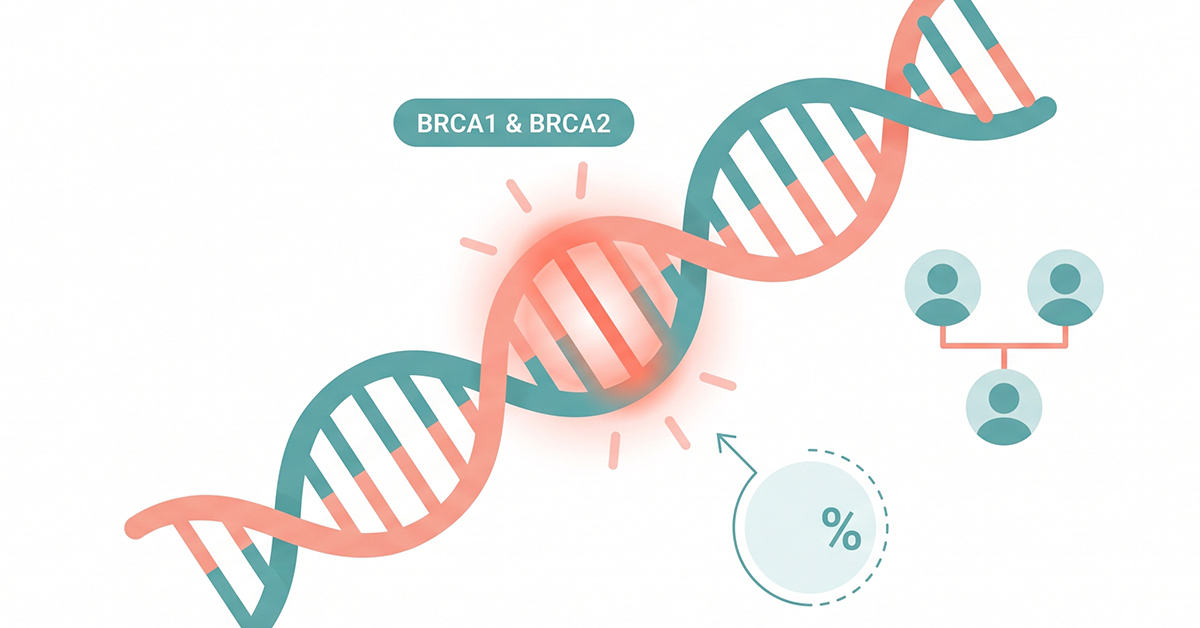
BRCA1 and BRCA2 gene mutations are the most well-known genetic causes of breast cancer. Women carrying a BRCA1 mutation face a lifetime breast cancer risk of 55–72%. BRCA2 mutations carry a 45–69% lifetime risk. These are inherited in an autosomal dominant pattern, meaning one mutated copy is enough to raise risk significantly.
Approximately 5–10% of all breast cancer cases are hereditary, caused by inherited gene mutations passed from parent to child. BRCA1 and BRCA2 are the most studied, but mutations in PALB2, ATM, CHEK2, and TP53 also confer elevated risk.
Who Should Consider Genetic Testing?
- Women with a first-degree relative (mother, sister, daughter) diagnosed before age 50
- Women with multiple relatives on either side with breast or ovarian cancer
- Women of Ashkenazi Jewish ancestry (higher BRCA mutation prevalence)
- Men diagnosed with breast cancer
- Any woman with a personal history of bilateral breast cancer
Genetic counselling, available at most major cancer centres in India, can determine whether testing is appropriate. A positive result does not mean cancer is inevitable — it means enhanced surveillance and preventive options become available.
3. Hormonal Risk Factors: Oestrogen, Progesterone, and Life Events
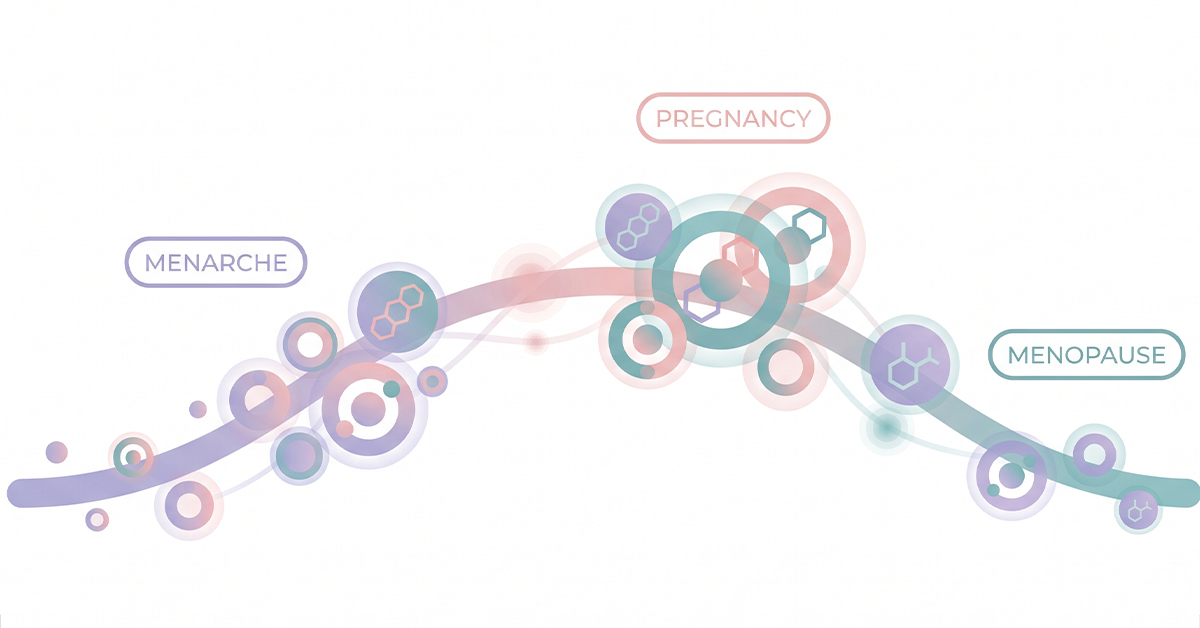
Cumulative oestrogen exposure is a major driver of hormone-receptor-positive breast cancers. Risk is elevated by: early menarche (before age 12), late menopause (after age 55), never having been pregnant, having a first child after age 30, and use of combined hormone replacement therapy (HRT) for more than five years. Oral contraceptive use adds a small, temporary increased risk.
About 70–80% of breast cancers are hormone-receptor positive (HR+). This means they have receptors for oestrogen, progesterone, or both — and these hormones fuel tumour growth. The longer breast tissue is exposed to circulating oestrogen, the higher the cumulative risk.
Breastfeeding Is Protective
Breastfeeding reduces oestrogen levels during lactation and lowers total lifetime exposure. Studies show that each year of breastfeeding reduces breast cancer risk by approximately 4.3% (Collaborative Group on Hormonal Factors in Breast Cancer, The Lancet, 2002). Longer cumulative breastfeeding duration across multiple children provides greater protection.
HRT and Oral Contraceptives
Combined oestrogen-progestogen HRT used for more than five years has been shown to increase breast cancer risk, with the excess risk rising the longer it is used and persisting for more than a decade after stopping (Collaborative Group on Hormonal Factors in Breast Cancer, The Lancet, 2019). Women using HRT for managing menopause symptoms should discuss the balance of benefits and risks with their specialist.
4. Lifestyle Factors: Obesity, Alcohol, and Physical Inactivity
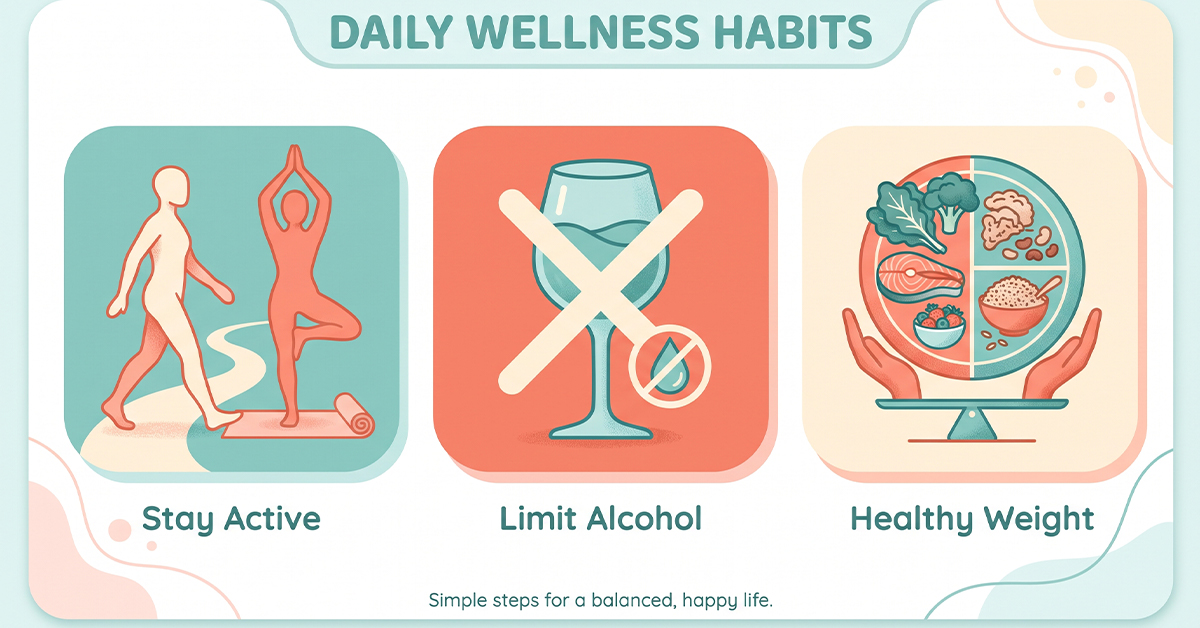
Obesity after menopause increases breast cancer risk by 20–40% because fat tissue converts androgens into oestrogen, raising circulating hormone levels. Alcohol is independently carcinogenic — drinking just one unit per day raises risk by 7–10%. Physical inactivity compounds both factors by elevating insulin and inflammatory markers.
While genetic factors are often what patients first ask about, lifestyle contributes significantly to breast cancer risk — and, crucially, lifestyle factors are modifiable. This gives women meaningful agency in their risk profile.
The Obesity-Oestrogen Link
After menopause, the ovaries stop producing oestrogen. Adipose (fat) tissue becomes the primary source, converting androgens into oestrogen via a process called aromatisation. A higher body mass index (BMI) means more adipose tissue and more oestrogen production, creating the conditions for hormone-driven tumour growth.
Alcohol as a Carcinogen
The World Health Organization classifies alcohol as a Group 1 carcinogen. For breast cancer specifically, alcohol raises oestrogen and androgen levels, increases DNA damage in breast cells, and impairs folate metabolism. The dose-response relationship is linear — there is no safe lower limit for breast cancer risk reduction.
Exercise as a Protective Factor
Moderate physical activity (150–300 minutes per week of brisk walking, swimming, or yoga) reduces postmenopausal breast cancer risk by 12–21% (American Cancer Society Guidelines, 2020). Physical activity lowers insulin, reduces body fat, and decreases inflammatory cytokines — all of which influence tumour development.
5. Dense Breast Tissue and Radiation Exposure
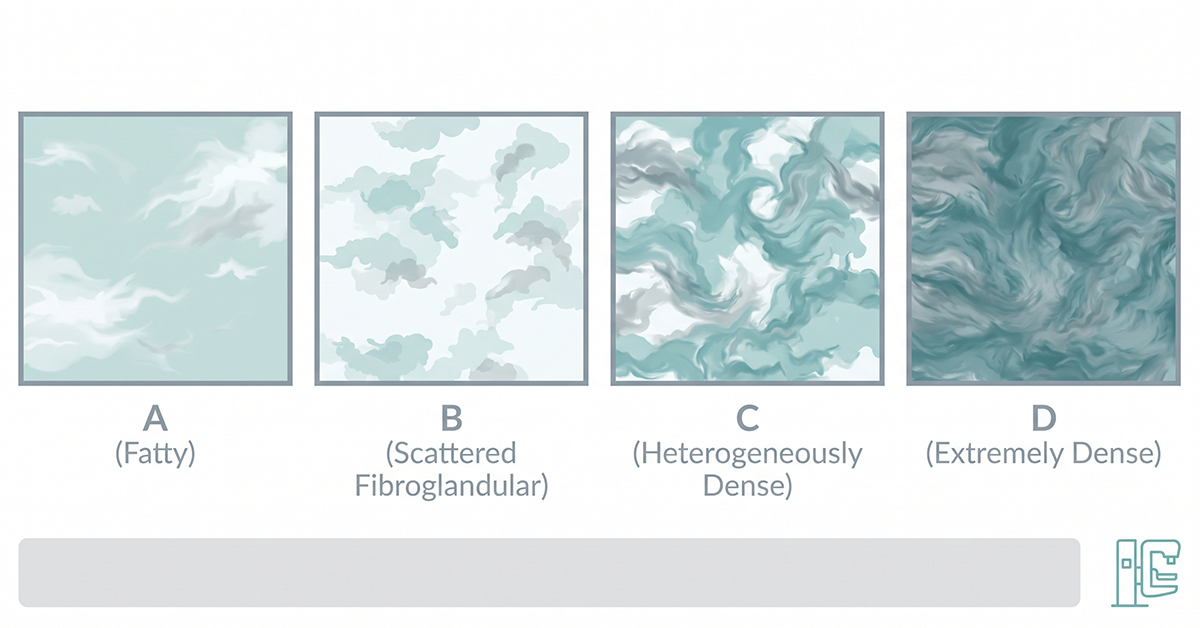
Dense breast tissue — where fibrous and glandular tissue outweighs fat — is both a direct risk factor for breast cancer and makes tumours harder to detect on standard mammograms. Women with extremely dense breasts have a 4–6x higher risk than those with primarily fatty breasts. Therapeutic radiation to the chest (e.g. for Hodgkin lymphoma) also significantly raises lifetime breast cancer risk.
Breast density is measured on a four-category scale (BI-RADS) and is largely determined by genetics, age, and hormonal status. Younger women and those taking HRT tend to have denser tissue. Density decreases naturally with age and after menopause.
Why Density Matters for Screening
In women with dense breasts, mammography misses approximately 25% of cancers (American College of Radiology, 2021). Supplemental screening with ultrasound or MRI is often recommended, particularly for those who also carry other risk factors.
Therapeutic vs. Diagnostic Radiation
Diagnostic X-rays and mammograms use very low-dose radiation and do not meaningfully raise breast cancer risk. Therapeutic radiation — the doses used to treat other cancers — does carry risk, particularly when administered to young women whose breast tissue is still developing. Women who received chest radiation before age 30 (for example, to treat Hodgkin lymphoma) are monitored with enhanced screening protocols.
6. Types of Breast Cancer: Understanding Your Diagnosis
Not all breast cancers are the same. The specific type and subtype significantly affects prognosis, treatment pathway, and survivorship planning. Below are the most clinically important types.
HER2-Positive Breast Cancer
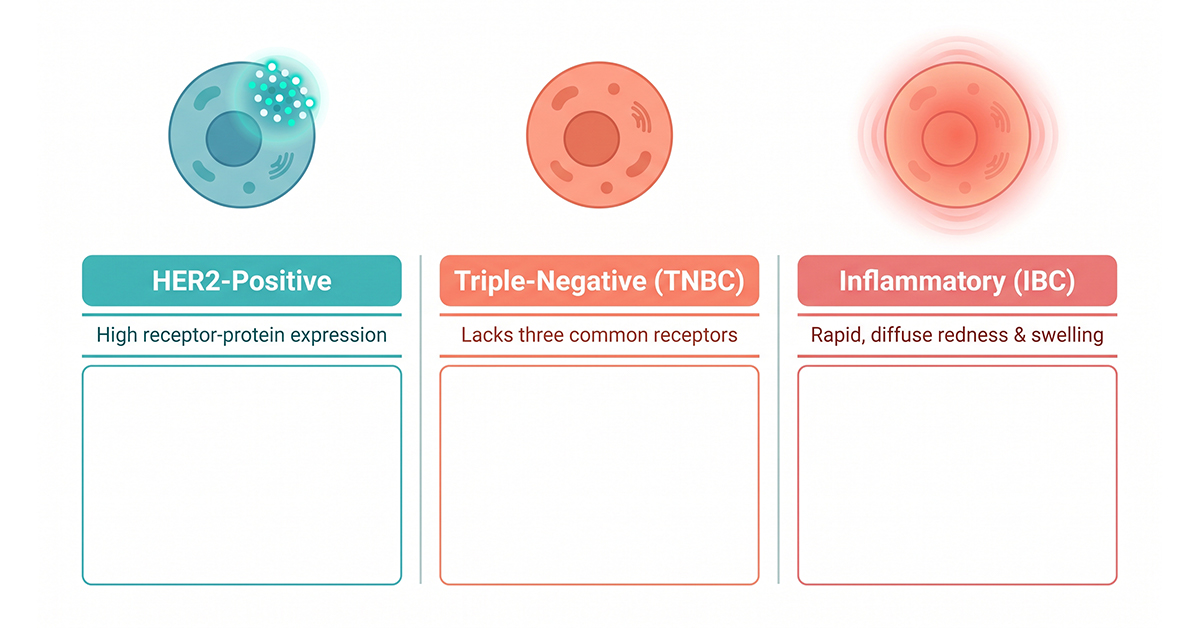
HER2-positive breast cancer overexpresses the HER2 protein, which drives rapid cell proliferation. It accounts for 15–20% of all breast cancers and was historically more aggressive. Targeted therapies — principally trastuzumab (Herceptin) — have transformed outcomes, and HER2-positive patients now have significantly better 5-year survival rates than 15 years ago.
HER2-negative breast cancer refers to any subtype that does not overexpress this protein — a broader category that includes both HR-positive and triple-negative cancers.
Triple-Negative Breast Cancer (TNBC)
Triple-negative breast cancer (TNBC) lacks oestrogen receptors, progesterone receptors, and HER2 overexpression. It represents 10–20% of breast cancers, is more common in younger women and women of African descent, and is generally more aggressive with faster growth. Because it does not respond to hormonal or HER2-targeted therapies, chemotherapy remains the backbone of systemic treatment.
Despite its aggressive reputation, TNBC often responds well to chemotherapy in the neoadjuvant (pre-surgery) setting. Immunotherapy combinations (pembrolizumab with chemotherapy) have improved outcomes for high-risk TNBC. PARP inhibitors are an emerging option for TNBC patients with BRCA mutations.
Inflammatory Breast Cancer (IBC)
Inflammatory breast cancer is a rare, aggressive form accounting for 1–5% of all cases. Cancer cells block the lymph vessels in the skin of the breast, causing rapid onset redness, swelling, warmth, and a peau d'orange (orange-peel) skin texture. It typically does not form a distinct lump and is usually diagnosed at Stage III or IV. IBC is treated with a multimodal approach: neoadjuvant chemotherapy, surgery, and radiation.
Because IBC does not present as a lump, it is frequently misdiagnosed as mastitis (breast infection) initially. Women who notice sudden breast redness, swelling, or skin changes that do not resolve within a week should seek medical evaluation promptly, especially if antibiotics do not bring rapid improvement.
7. Age, Family History, and Personal Cancer History
Age is the most powerful non-genetic risk factor for breast cancer. Risk rises steeply after 40 and peaks between 60 and 69. A first-degree family history of breast cancer roughly doubles lifetime risk. A personal history of breast cancer raises the risk of a second primary tumour by 3–4x compared to the general population.
In India, breast cancer incidence has historically skewed younger than in Western populations — a significant proportion of diagnoses occur in women aged 30–50. This reinforces the importance of not treating breast cancer as exclusively a condition of older women.
Women with a first-degree relative diagnosed with breast cancer are advised to begin annual mammography screening 10 years before the age at which their relative was diagnosed, or at age 40 — whichever comes first (Indian Council of Medical Research screening guidelines).
Evidence, Authority & Complementary Support: Health Reactive's Role
|
🏥 Clinical Trial Credential — Our Primary Differentiator |
|
Health Reactive India is, to our knowledge, the only Ayurvedic company with a completed, CTRI-registered human clinical trial for cancer support (CTRI/2023/11/059465), conducted at J.B. Roy State Ayurvedic Medical College & Hospital, Kolkata. Body Revival was studied as a complementary formulation to support immunity, vitality, and quality of life in breast cancer patients recovering from surgery and undergoing conventional cancer treatment. The trial was a 44-patient, 12-week study scoped specifically to post-surgical breast cancer recovery and has not been evaluated in other cancer types or treatment stages. No Ayurvedic supplement — including Body Revival — treats or cures cancer. What the trial evaluated is whether AYUSH-registered supportive care can measurably help patients maintain wellness, energy, and immune function during their oncology journey. |
Complementary care in oncology is increasingly recognised by integrative medicine specialists. The goal is not to replace the oncologist's protocol — it is to help the patient manage treatment side-effects, maintain nutrition and immunity, and sustain quality of life throughout chemotherapy, radiation, or targeted therapy.

|
💬 Expert Perspective |
|
“In cancer care, the patient's overall wellbeing — immunity, nutrition, energy — is not secondary to the tumour response. Complementary Ayurvedic support that has been properly studied can play a meaningful role in maintaining quality of life alongside standard oncology treatment.” — Munish Khan, CEO, Health Reactive India (est. 1996) |
What Cancer Patients and Caregivers Can Do Next
Knowledge of breast cancer causes is most useful when it translates into action. Here are five practical steps for patients and their families:
- Discuss your personal and family risk history with your oncologist or gynaecologist at your next appointment.
- Ask your doctor whether genetic counselling is appropriate for your family history — BRCA testing is increasingly available at major hospital centres across India.
- If you are currently in treatment, speak to your care team about complementary supportive care options for managing immunity, fatigue, and quality of life.
- Adopt evidence-supported lifestyle modifications: maintain a healthy weight, limit alcohol, and engage in regular moderate physical activity where your treatment plan permits.
- Seek support from a registered oncology social worker or patient support group — emotional health is a documented component of overall wellness during treatment.
Causes Are the Starting Point, Not the Full Story
The causes of breast cancer span genetics, hormones, lifestyle, age, and environment — and in most cases, several factors interact. Understanding these causes helps patients ask better questions, make earlier decisions, and approach treatment with greater confidence.
Three key takeaways from this guide: First, the majority of breast cancer cases are not explained by a single inherited mutation — lifestyle and environmental factors matter and can be addressed. Second, knowing your subtype — whether HER2-positive, triple-negative, or inflammatory breast cancer — is essential to understanding your treatment options. Third, complementary care, when properly studied and transparently positioned, can support patients' wellbeing throughout the oncology journey without conflicting with conventional treatment.
If you or a family member is navigating a breast cancer diagnosis and would like to explore evidence-based complementary Ayurvedic support, our team is here to help — with empathy, not sales pressure.
|
🌿 Book a Free Consultation with Our Ayurvedic Wellness Team Supporting 1 lakh+ cancer patients boost immunity naturally — complementary care alongside your oncology treatment. Call / WhatsApp: +91-86553-10500 | healthreactive.com |
|
👤 CEO Bio |
|
Munish Khan is the CEO of Health Reactive India (est. 1996), an ISO/GMP-certified Ayurvedic wellness manufacturer based in Andheri West, Mumbai. With nearly three decades in complementary wellness, Munish leads the team behind Body Revival — an AYUSH-registered liquid Ayurvedic formulation studied in a CTRI-registered clinical trial for cancer supportive care. Health Reactive has supported over 1 lakh cancer patients across India. Website: healthreactive.com | WhatsApp/Call: +91-86553-10500 |
|
⚠️ IMPORTANT DISCLAIMER This article is for informational and educational purposes only. It does not constitute medical advice, diagnosis, or treatment. Body Revival is an AYUSH-registered Ayurvedic formulation intended as complementary supportive care alongside standard oncology treatment — not as a replacement for any conventional cancer therapy. Always consult a qualified medical professional before making any health decisions. |