Can Ayurvedic Medicine Be Taken Along with Chemotherapy? 10 Essential Safety Facts for 2026

Published: 25 November 2026 | Last updated: 25 November 2026 | Reading time: about 20 minutes
Written by Dr. Hemant Kadam, BAMS | Medically reviewed by Dr. Farah Zariwala, BHMS
|
Important This guide is for education only. It is not medical advice and does not diagnose or treat any condition. Never start, stop, or change any medicine during cancer treatment without your oncologist’s approval. |
An estimated 22% of cancer patients worldwide use herbal medicines. That figure comes from a 2025 review in the International Journal of Molecular Sciences. So one question comes up in almost every family: can Ayurvedic medicine be taken along with chemotherapy?
If you are a patient or a caregiver, you want relief from fatigue, nausea, and weakness. You also fear doing anything that could weaken your chemotherapy. Online answers swing between “it is completely safe” and “never touch it.” Neither helps you decide.
In this guide, you will discover how herbs can interact with chemotherapy, what to check before taking any Ayurvedic product, and which questions to ask your oncologist — without delaying or replacing any prescribed treatment.
This guide was written by Dr. Hemant Kadam, BAMS, and medically reviewed by Dr. Farah Zariwala, BHMS, who has more than 10 years of experience in Ayurveda and Homeopathy. Health Reactive has been working in Ayurvedic medicine for 30 years and has supported more than 1,00,000 patients.
|
Key takeaways • Ayurvedic medicine can be taken during chemotherapy only with your oncologist’s approval. • Herbs can lower or raise chemotherapy levels, and some may work against the drug. • Product quality matters. Heavy metals and liver injury are documented risks. • No reliable human evidence shows that Ayurveda treats or cures cancer. • Mind-body practices have the strongest evidence for easing side effects. • Never stop or delay chemotherapy for an unproven remedy. |
How this guide was prepared. The medical content draws on clinical guidelines, peer-reviewed studies, and patient information from cancer charities. Every source appears in the reference list with a link. Dr. Hemant Kadam, BAMS, wrote the guide. Dr. Farah Zariwala, BHMS, reviewed it. We will update it when new evidence appears.
Can Ayurvedic Medicine Be Taken Along with Chemotherapy?
Chemotherapy drugs work within a narrow safety window. If too little drug reaches the tumour, treatment weakens. If too much builds up, side effects worsen. Herbs and supplements can push drug levels in either direction.
That is why oncology teams ask patients to disclose everything they take, including Ayurvedic and herbal products. The honest answer to this question is “sometimes, but only with your oncologist’s approval.”
|
Direct answer Ayurvedic medicine can be taken during chemotherapy only if your oncologist approves it first. Some herbs change how the liver processes chemotherapy drugs. This can weaken treatment or raise toxicity. Safety depends on your regimen, your blood and liver reports, and the exact product. No single herb list fits every patient. |
A systematic review summarised in The ASCO Post (2013) covered 890 documented herb–drug interaction pairs. St. John’s wort caused the most (147), followed by ginkgo (51) and kava (41). Few herb–drug pairs have been tested together in clinical studies, so the true risk is often unknown.
What “along with chemotherapy” can mean
Patients usually ask about one of three situations. The first is before treatment starts. The second is during active chemotherapy cycles. The third is after treatment ends. The risks differ in each phase, so tell your oncologist which one you mean.
Why “natural” does not always mean safe
Many modern drugs began as plant compounds. A plant strong enough to have a real effect on the body can also interfere with a drug. Strength, purity, and ingredient mix also vary from one product to the next.
Who needs extra caution
Extra care matters most in these situations:
- You take a drug that the liver breaks down through CYP3A4, such as irinotecan, docetaxel, or imatinib.
- Your liver or kidney tests are abnormal, or your blood counts are low.
- You have a hormone-sensitive cancer. The ASCO Post advises such patients to avoid certain herbs.
- You take many other medicines. Polypharmacy makes interactions more common.
What Is Ayurvedic Medicine, and How Is It Used Alongside Cancer Care?
Ayurveda is an ancient Indian system of medicine. The name joins two Sanskrit words: ayur, meaning life, and veda, meaning knowledge. Practitioners believe health depends on a balance of three elements called doshas (Cancer Research UK).
Treatment can include diet advice, herbal medicines, massage, and meditation. Ayurveda draws on more than 200 herbs and plants. Understanding this range helps you see why safety advice must be product-specific.
|
Direct answer Ayurvedic medicine is a traditional Indian health system that aims to balance mind, body, and spirit. It uses herbs, diet advice, massage, and meditation. In cancer care, people use it only as complementary support. It does not replace surgery, chemotherapy, or radiation, which remain the proven treatments for cancer. |
Classical formulas and proprietary products
Ayurvedic products fall broadly into two groups. Classical formulas follow recipes described in traditional texts. Proprietary products are newer formulas made by individual companies. Both can contain many ingredients.
The label rarely tells you how a formula behaves beside a chemotherapy drug. That is why a product’s traditional use is not a safety guarantee.
Who regulates Ayurvedic medicines in India?
In India, Ayurvedic drugs fall under the Drugs and Cosmetics Act, 1940, and the Ministry of AYUSH oversees the system. Manufacturers need a state-issued licence and must follow good manufacturing practice.
A licence shows that a legal manufacturer made the product. It does not prove the product is safe with your chemotherapy drugs.
Why many patients turn to Ayurveda
Reasons vary. Some patients want relief from side effects. Some follow family tradition. Others want to feel they are doing something active for their recovery. These motives are all understandable.
They deserve a respectful conversation with your care team, not a lecture. Raise the topic early and without embarrassment.
How Do Herbs Interact with Chemotherapy Drugs?
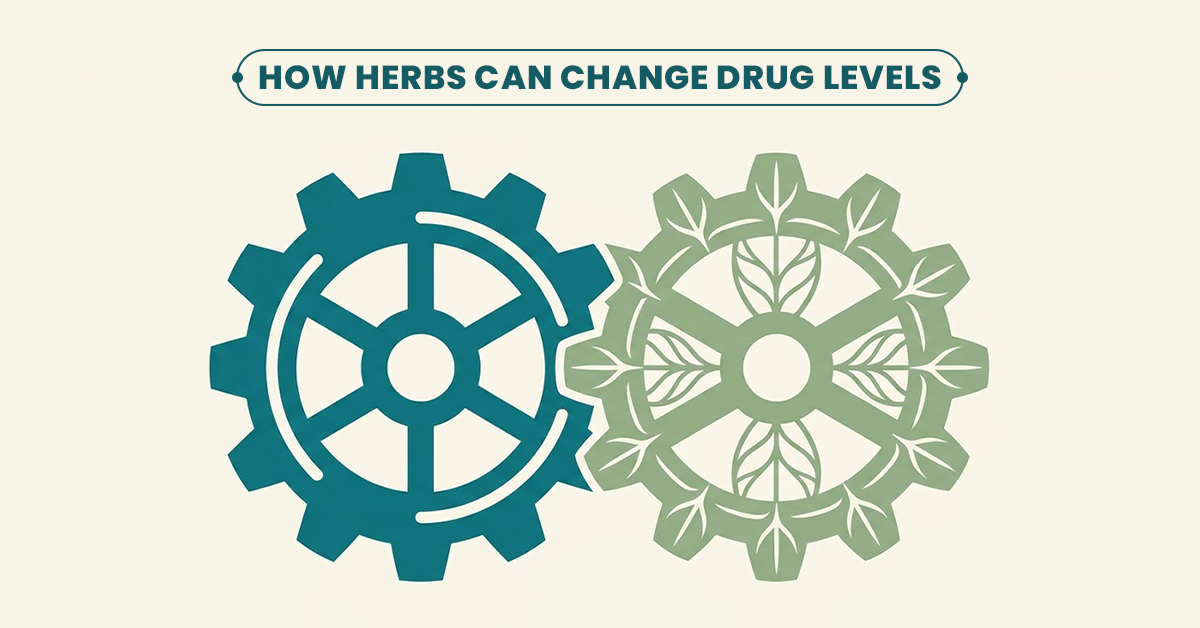
Your liver breaks down most chemotherapy drugs. A family of enzymes called cytochrome P450 (CYP) does much of this work, and CYP3A4 is among the busiest. Transport proteins such as P-glycoprotein then move drugs in and out of cells. Many herbs act on these same systems.
|
Direct answer Herb–drug interactions happen when a herb changes how the body absorbs, breaks down, or responds to a drug. Some herbs speed up liver enzymes and lower chemotherapy levels. Others slow those enzymes and raise toxicity. Some work against the drug directly. Because the effect depends on dose and timing, an oncologist should review each herb. |
Pharmacokinetic interactions: changing drug levels
St. John’s wort is the best-known example. It switches on CYP3A4 and P-glycoprotein. The ASCO Post (2013) reports on human studies. They found that its hyperforin component lowered plasma levels of irinotecan and imatinib by more than 40%. Lower drug levels can mean under-treatment.
Other products slow metabolism instead. Grapefruit juice blocks CYP3A4 in the gut and can raise levels of some oral drugs (Gandhi et al., 2025).
Pharmacodynamic interactions: working against the drug
Some interactions change a drug’s effect without changing its level. Many chemotherapies and radiation damage cancer cells through reactive oxygen species. Researchers worry that high-dose antioxidant supplements could blunt this effect.
The 2025 Gandhi review gives a clear example. The green tea polyphenol EGCG binds the cancer drug bortezomib and deactivates it. Dose changes cannot fix this kind of conflict.
What about turmeric and other Ayurvedic herbs?
A 2025 systematic review lists turmeric (Curcuma longa) among herbs that may modulate CYP3A4 and CYP2D6 enzymes (Pamungkas et al., 2025). Turmeric in food is a different matter. Concentrated extracts and capsules are what need review.
Most Ayurvedic multi-herb formulas have never been tested alongside chemotherapy. “No known interaction” therefore often means “not studied.” It does not mean “proven safe.”
Targeted therapy and immunotherapy need caution too
Chemotherapy is not the only treatment affected. The 2025 Gandhi review also covers targeted drugs and immunotherapy. Many modern cancer drugs are taken as tablets. The liver breaks them down in the same way as other medicines.
So tell your oncologist about every herb, whatever treatment you receive. The rule stays the same across cancer types and drug classes.
What Should You Check Before Taking Ayurvedic Medicines During Chemotherapy?
Interactions are only one risk. Product quality is the other. Ayurvedic medicines range from single herbs to multi-ingredient formulas. A few traditional preparations, called rasa shastra, deliberately contain metals or minerals.
|
Direct answer Before taking any Ayurvedic medicine during chemotherapy, check four things. Confirm the manufacturer holds a valid licence. Read the full ingredient list. Ask whether it contains metals or minerals. Show it to your oncologist with your latest liver and kidney reports. Avoid products from unregistered sellers or those promising a cancer cure. |
Heavy metals and rasa shastra preparations
Saper et al. (JAMA, 2008) bought 193 Ayurvedic products online and tested them. In all, 20.7% contained detectable lead, mercury, or arsenic. Rasa shastra products were more likely to contain metals than other products (40.6% versus 17.1%).
Some rasa shastra products could deliver lead or mercury at 100 to 10,000 times the acceptable limits. US-made and Indian-made products were equally likely to contain metals.
The study is from 2008, so ask for current batch test reports. Do not assume a product is clean or contaminated. Chemotherapy already stresses the liver and kidneys, so any extra toxic load matters.
Liver injury is a documented risk
A single-centre study from Kochi (Philips et al., Indian Journal of Gastroenterology, 2018) reviewed 1,440 liver disease patients. Of these, 94 had severe liver injury and had taken Ayurvedic or herbal medicines. In 33, the medicine was the suspected cause.
Among 27 patients who had a liver biopsy, five died. Arsenic and mercury exposure was significantly linked to death. Medicines from unregistered traditional healers were linked to higher mortality.
This does not mean Ayurvedic medicines are unsafe in general. It shows why licensed manufacturing and liver monitoring matter.
Multi-herb formulas hide the culprit
When a product contains many herbs, doctors struggle to find which ingredient caused a problem. A 2018 editorial by Dr. Harshad Devarbhavi in the Indian Journal of Gastroenterology made this point. It is another reason to keep one clear, complete ingredient list for every product you take.
Questions to ask the manufacturer or seller
A reputable manufacturer should answer these questions without hesitation:
- What is the full ingredient list, including every herb, mineral, and additive?
- Does the product contain any metal-based or mineral-based preparation?
- What is the manufacturing licence number, and can I verify it?
- Can I see a recent batch test report for heavy metals and contaminants?
- Has the product been studied in patients receiving chemotherapy?
Why “organic” or “pure” labels are not enough
Marketing words such as organic, pure, or traditional are not safety tests. They describe how a product is marketed. They do not tell you what is inside the bottle, or how it behaves beside your drugs.
Rely on licence details, ingredient transparency, and your oncologist’s review instead.
Does Ayurvedic Medicine Work for Cancer?
This is the most searched question on the topic, and it deserves a plain answer. Some Ayurvedic herbs show activity in laboratory dishes and animal studies. Proof in human patients is missing.
|
Direct answer No reliable human evidence shows that Ayurvedic medicine treats or cures cancer. Laboratory and animal studies on some herbs are interesting but unproven in patients. Large randomised trials are still needed. Surgery, chemotherapy, radiation, and other proven therapies remain the foundation of cancer treatment. Ayurveda is best viewed as supportive care alongside them. |
Cancer Research UK states that researchers have tested some Ayurvedic compounds in laboratories and in animals. Some may slow cancer growth in animals. Human evidence is lacking until large randomised trials are done. The charity also notes that some Ayurvedic treatments may help relieve symptoms and improve quality of life.
It adds a clear warning. You could harm your health if you stop cancer treatment for an unproven therapy.
Complementary versus alternative: why the word matters
The U.S. National Cancer Institute defines complementary medicine as care used along with standard treatment. It defines alternative medicine as care used instead of standard treatment. Using a diet or herb to replace prescribed cancer drugs is the risky path.
Health Reactive supports only the first approach.
Red flags to watch for
Walk away from any seller or practitioner who does the following:
- Promises to cure cancer. Indian law (the Drugs and Magic Remedies Act, 1954) restricts advertising of such claims.
- Tells you to stop, skip, or delay chemotherapy.
- Claims “no side effects” or “100% natural, so 100% safe.”
- Hides the ingredient list or the manufacturer’s licence details.
- Relies only on testimonials instead of published or registered research.
How to read claims about “research” on Ayurvedic products
Research moves through stages. Cell studies come first. Animal studies follow. Human clinical trials come last. Most herb research stops at the first two stages.
A result in a dish or a mouse does not predict a result in a patient. When a seller cites research, ask three questions. Was it done in people? Was it published in a peer-reviewed journal? Did it test the same product, in the same dose, in patients like you?
What Are the Most Common Myths About Ayurveda and Chemotherapy?
Misinformation spreads fast through family chats and social media. A few persistent myths cause most of the harm. Sorting fact from myth helps you ask better questions.
|
Direct answer The most common myth is that natural means safe. Herbs can interact with chemotherapy, carry contaminants, and injure the liver. Other myths claim Ayurveda cures cancer, that antioxidants always protect, or that spacing doses hours apart prevents interactions. Each myth can lead to harm, so check every claim with your oncologist. |
|
Myth |
Fact |
|
“Ayurvedic medicines are natural, so they are always safe.” |
Natural products can interact with drugs, contain heavy metals, and injure the liver (Saper et al., 2008; Philips et al., 2018). |
|
“A licensed product has been tested with chemotherapy.” |
A licence covers manufacturing. Most multi-herb formulas have never been studied beside chemotherapy. |
|
“Ayurveda can cure cancer.” |
No reliable human evidence supports this (Cancer Research UK). |
|
“Antioxidants always protect me during treatment.” |
High-dose antioxidants may blunt some therapies. EGCG deactivates bortezomib (Gandhi et al., 2025). |
|
“Taking medicines hours apart avoids interactions.” |
Not always. Some herbs change liver enzyme activity over days, so spacing doses may not prevent an interaction. |
|
“My practitioner does not need to know my chemotherapy drugs.” |
Both your practitioner and your oncologist need your full regimen to judge safety. |
Why these myths persist
Myths feel comforting. They offer control during a frightening time. Testimonials also spread faster than studies. A single success story can drown out thousands of quiet cases where harm occurred.
Ask one question about every claim: where is the evidence, and who checked it?
What Does the Evidence Say About Ayurveda Chemotherapy Side Effects?
Chemotherapy can cause fatigue, nausea, anxiety, low mood, and neuropathy. Patients naturally look for relief beyond prescribed medicines. The question is which options have real evidence behind them.
|
Direct answer The strongest evidence for easing chemotherapy side effects backs mind-body practices. These include yoga, meditation, and stress management, plus acupressure for nausea. Evidence for ingested herbal supplements is weak. The ASCO and Society for Integrative Oncology guideline found no strong evidence that dietary supplements manage treatment side effects. Oncologists should review every supplement. |
The key source is the Society for Integrative Oncology guideline. The American Society of Clinical Oncology endorsed it (Lyman et al., Journal of Clinical Oncology, 2018). It covers breast cancer, but its findings help all patients frame the question. The table below summarises its main points.
|
Concern |
What the 2018 ASCO-endorsed guideline says |
|
Anxiety and stress |
Music therapy, meditation, stress management, and yoga are recommended. |
|
Depression and low mood |
Meditation, relaxation, yoga, massage, and music therapy are recommended. |
|
Quality of life |
Meditation and yoga are recommended. |
|
Chemotherapy-induced nausea and vomiting |
Acupressure and acupuncture are recommended alongside anti-nausea medicines. Glutamine is not recommended. |
|
Peripheral neuropathy |
Acetyl-L-carnitine is not recommended because it may cause harm. |
|
Ingested dietary supplements in general |
No strong evidence supports their use for managing treatment side effects. |
Where Ayurveda’s lifestyle tools overlap with the evidence
Ayurveda is more than medicines. It includes yoga, meditation, breathing practices, and diet guidance. Several of these overlap with the guideline’s recommended mind-body practices.
Ask your oncologist or a dietitian before changing your diet during chemotherapy. Appetite, weight, and blood counts all affect what is safe.
Questions to ask about any side-effect remedy
Before you try any remedy for nausea, fatigue, or neuropathy, ask these questions:
- What does the evidence show in patients on chemotherapy, not just in the laboratory?
- Could it interact with my anti-nausea, pain, or chemotherapy drugs?
- Does a non-ingested option, such as yoga, meditation, or acupressure, fit my situation first?
- Who will monitor me, and which tests will we repeat?
Is Ayurvedic Medicine After Chemotherapy Safe?
When chemotherapy ends, many patients feel ready to “rebuild” with Ayurvedic medicines. The recovery phase still needs caution. Your liver, kidneys, and blood counts may be recovering. Many patients also continue hormonal, targeted, or immunotherapy drugs.
|
Direct answer Ayurvedic medicine after chemotherapy may be considered once your oncologist confirms your blood counts, liver, and kidney function are stable. Your follow-up treatment also matters, because targeted and hormonal drugs can interact with herbs. Start only one product at a time, from a licensed source, and report any new symptoms promptly. |
The 2025 Gandhi review covers interactions with chemotherapy, targeted therapy, and immunotherapy. Its message applies after chemotherapy too. Any herb that changes drug metabolism can matter whenever you take a prescription cancer drug.
A safer way to approach the recovery phase
Discuss these points with your oncologist first:
- Request fresh liver function, kidney function, and blood count tests before starting anything new.
- Start one product at a time. This makes it easier to trace any reaction.
- Stay on your follow-up schedule for scans and blood tests.
- Avoid aggressive “detox” routines. Cancer Research UK warns that purgation and enemas can have serious side effects.
Does timing around chemotherapy cycles matter?
Timing can matter, but no universal rule exists. Chemotherapy repeats in cycles, and blood counts usually dip between them. Your oncologist may want some products paused before blood tests, procedures, or surgery.
Do not guess the timing yourself. Ask your oncology team to set a written calendar that covers every product you take.
Keep monitoring after treatment ends
Follow-up is a long phase. Scans, blood tests, and check-ups continue for months or years. Keep your medicine log up to date throughout.
Bring it to every follow-up visit. Your oncologist can then spot new interactions when your prescriptions change.
How Can You Discuss Ayurvedic Treatment Along with Chemotherapy with Your Oncologist?
Many patients feel nervous raising this topic. They fear being dismissed. A prepared conversation makes it easier. It also gives your oncologist the facts needed to protect your treatment.

|
Direct answer To discuss Ayurvedic treatment along with chemotherapy, list every product you take and bring the labels. Share your chemotherapy schedule with any Ayurvedic practitioner. Ask your oncologist whether each product is safe for your regimen. Get liver, kidney, and blood tests. Start one product at a time and report symptoms quickly. |
Step 1: List everything you take
Write down every herb, powder, tablet, tonic, and supplement. Include brand, dose, and how long you have used it.
Step 2: Bring the labels
Take the packaging or clear photos of the ingredient lists and the manufacturer’s licence details to your appointment.
Step 3: Share your regimen with your practitioner
Give your Ayurvedic practitioner the names of your chemotherapy drugs, the cycle dates, and your latest test reports.
Step 4: Ask your oncologist five questions
Ask: Is this safe with my drugs? Does the timing matter? Which tests should I repeat? Which symptoms should worry me? Should I wait until after a cycle or after surgery?
Step 5: Get baseline tests
Ask for liver function, kidney function, and blood counts before you start, and again as your oncologist advises.
Step 6: Start one product at a time
Change only one thing at a time. This helps you and your doctors link any reaction to its cause.
Step 7: Report warning signs at once
Call your oncology team promptly for any of these: yellow eyes or skin, dark urine, persistent vomiting, unusual bruising or bleeding, or severe abdominal pain. Fever during chemotherapy needs urgent medical care.
What Should Caregivers Know About Ayurvedic Medicine During Chemotherapy?
Caregivers often become the family’s medicine manager. They also receive well-meant advice from relatives, neighbours, and group chats. Not all of that advice is safe. Your role is to keep information flowing between everyone involved.
|
Direct answer Caregivers should keep one written list of every medicine and supplement the patient takes. Share it at each oncology visit. Check that no new product starts without approval. Watch for warning signs such as yellow eyes, dark urine, vomiting, or unusual bruising. Call the oncology team quickly if any appear. |
Keep one shared medicine log
A simple table works well. Copy it into a notebook or phone note and update it every time something changes.
|
Product |
Brand and supplier |
Dose and timing |
Start date |
Oncologist approved? |
Notes or reactions |
|
|
|
|
|
|
|
|
|
|
|
|
|
|
|
|
|
|
|
|
|
Handle well-meant advice from family and social media
Use a short checklist before anyone starts something new:
- Pause. Do not start a product the same day you hear about it.
- Ask where the claim comes from and who tested it.
- Check whether it promises a cure or tells you to skip treatment. If yes, reject it.
- Show the product to the oncologist and wait for an answer.
How to check whether an Ayurvedic product is licensed
Look for the manufacturer’s name, address, and licence number on the label. Ask the seller for a recent batch test report. Be cautious with products sold without labels or by unregistered sellers. The Kochi liver study linked unregistered sources to higher mortality (Philips et al., 2018).
Look after your own wellbeing too
Caregiving is demanding, and stress affects decisions. The 2018 ASCO-endorsed guideline recommends stress management and meditation for patients, and these practices can help caregivers too.
Share the load with family members. Ask the oncology team about counselling or support groups at your hospital.
What Do Experts and Our Own Experience Add to This Topic?
Cancer Research UK, a leading cancer charity, summarises the evidence on Ayurveda in one sentence:
|
“There is no reliable evidence to support its use as a treatment for cancer.” — Cancer Research UK, Ayurvedic medicine, patient information page (accessed November 2026) |
Health Reactive has worked in Ayurvedic medicine for 30 years and has supported more than 1,00,000 patients. Our position on this question is simple:
- Chemotherapy comes first. We never suggest delaying, reducing, or replacing it.
- Information before products. A safe answer needs your regimen, your schedule, and your latest reports.
- Your oncologist stays informed. We encourage you to share every product you take with your care team.
|
Transparency note A note on our own research. Health Reactive’s supportive-care formulation was studied in a small CTRI-registered trial (CTRI/2023/11/059465). It enrolled 44 post-surgical patients for 12 weeks at J.B. Roy State Ayurvedic Medical College and Hospital, Kolkata. The trial was open-label, finished in November 2024, and has not yet been peer reviewed. It says nothing about taking herbs during chemotherapy. Please do not read it that way. |
Frequently Asked Questions About Ayurvedic Medicine and Chemotherapy
It can be, but only after your oncologist reviews the exact product against your regimen. Risks include herb–drug interactions, contaminated products, and liver injury. Never start, stop, or change any medicine during chemotherapy without medical advice.
No single list suits everyone. Commonly flagged concerns include St. John’s wort, high-dose antioxidant extracts, products containing metals or minerals, and unlabelled multi-herb mixtures. Your oncologist should review every product against your specific drugs.
Turmeric used as a food spice is generally treated differently from concentrated extracts or capsules. A 2025 systematic review lists turmeric among herbs that may modulate CYP3A4 and CYP2D6 enzymes. Ask your oncologist before taking any turmeric supplement.
No. Reliable human evidence does not show that Ayurvedic medicine treats or cures cancer. Proven treatments such as surgery, chemotherapy, and radiation should not be delayed or replaced. Ayurveda is best viewed as supportive care alongside them.
Evidence is strongest for mind-body practices such as yoga and meditation, and for acupressure with anti-nausea drugs. Evidence for ingested herbal supplements is weak. Always discuss any supplement with your oncologist first.
There is no universal gap. The right timing depends on your chemotherapy drugs, the herb, your test results, and your cycle dates. Your oncologist should set the timing.
Possibly, once your oncologist confirms your blood counts, liver, and kidney function. Targeted and hormonal drugs can still interact with herbs. Start one licensed product at a time and report new symptoms quickly.
Do not stop. Speak to your oncologist first and consider a second medical opinion. Stopping proven treatment for an unproven therapy can harm your health.
Yes. Even products that seem mild can interact with drugs or affect the liver. Your oncologist can only protect your treatment if the full list is known.
Check the label for the manufacturer’s name, address, and licence number. Ask the seller for a recent batch test report. Avoid products that carry no label or that promise to cure cancer.
What to Remember Before You Decide
So, can Ayurvedic medicine be taken along with chemotherapy? Sometimes, but only with your oncologist’s approval and a carefully checked product.
Three takeaways matter most. First, herbs can change how chemotherapy works, in both directions. Second, product quality and liver safety deserve as much attention as the herb itself. Third, Ayurveda is supportive care. It is not a replacement for proven cancer treatment.
Prepare your list, bring your reports, and talk openly with your oncologist.
|
Next step Have questions about supportive care during or after chemotherapy? Our team can help you prepare your questions and review your options alongside your oncologist’s plan. Consultation does not replace your cancer treatment. |
|
About the author and reviewer Dr. Hemant Kadam, BAMS, wrote this guide. He has more than 10 years of experience in Ayurveda. Dr. Farah Zariwala, BHMS, medically reviewed it. She has more than 10 years of experience in Ayurveda and Homeopathy. |