Cancer Treatment in Mumbai: A Complete Guide to Hospitals, Supportive Care and What Patients Need to Know (2026)
Written by Dr. Hemant Kadam, BAMS
Medically reviewed by Dr. Farah Zariwala, BHMS, Senior Doctor, Health Reactive India, 10 years of experience in Ayurveda and homeopathic medicine
Last updated: August 31, 2026
|
⚠ IMPORTANT MEDICAL DISCLAIMER MEDICAL DISCLAIMER: This article is for informational purposes only and does not constitute medical advice. Body Revival is an AYUSH-registered Ayurvedic formulation and is NOT a cancer treatment, cure, or substitute for conventional oncology care. Health Reactive India makes no disease-treatment claims. All content on this page complies with India's Drugs & Magic Remedies Act (DMRA) and ASCI advertising guidelines. Cancer patients must consult their oncologist before using any supplement or complementary product. |
Every year, more than 14 lakh Indians receive a new cancer diagnosis — and a growing number of them come to Mumbai seeking world-class oncology care.
Mumbai is home to some of India's most advanced cancer treatment hospitals, but navigating them — understanding treatment types, managing side effects, and finding supportive resources — can feel overwhelming for patients and their families.
In this guide, you will discover the leading hospitals for cancer treatment in Mumbai, what questions to ask your oncologist, how to manage treatment side effects, and how some patients use complementary Ayurvedic wellness support alongside conventional care — without expensive out-of-pocket surprises or conflicting advice.
About this guide: It is written by the team at Health Reactive India, an ISO/GMP-certified Ayurvedic wellness manufacturer established in Mumbai in 1996. We have supported over 1 lakh cancer patients in managing immunity and general wellbeing alongside their oncology treatment over nearly three decades. This guide reflects what patients most commonly ask us — and the answers their oncologists actually give.
Top 5 Cancer Treatment Hospitals in Mumbai: What Patients Should Know
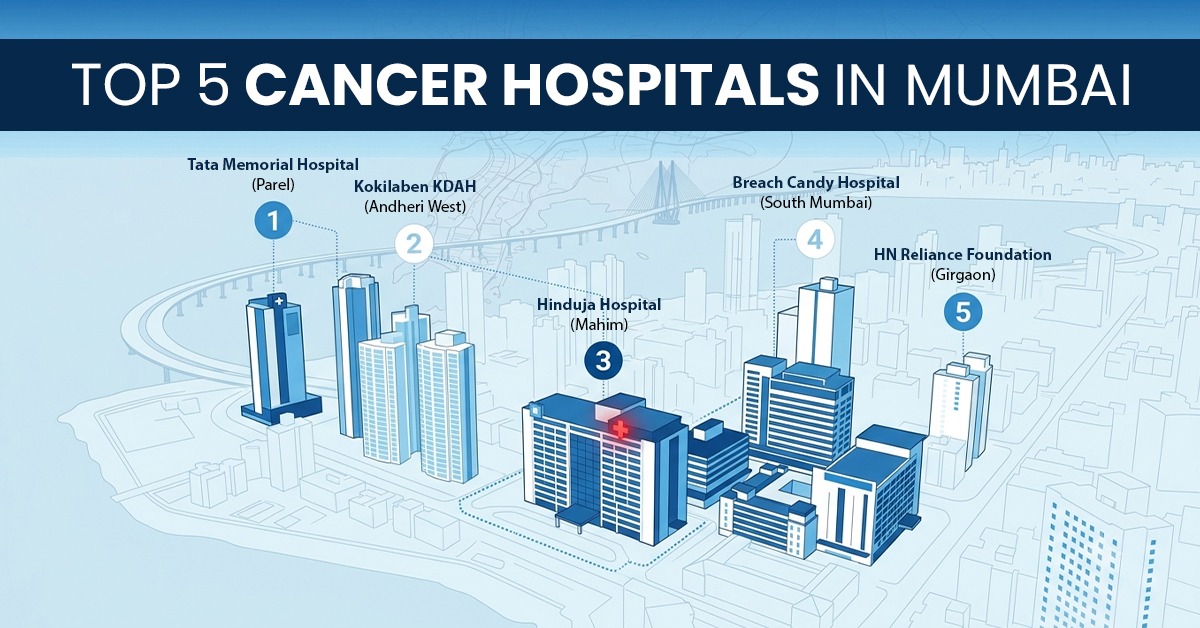
Mumbai's oncology landscape is anchored by a handful of nationally recognized institutions. Choosing the right one depends on cancer type, stage, insurance coverage, and proximity — not just reputation rankings.
|
Top cancer hospitals in Mumbai Mumbai's leading cancer treatment hospitals include Tata Memorial Hospital (Parel), Kokilaben Dhirubhai Ambani Hospital (Andheri), Hinduja Hospital (Mahim), Breach Candy Hospital (Breach Candy), and HN Reliance Foundation Hospital (Girgaon). Tata Memorial is India's largest public oncology referral centre. Private hospitals offer faster appointments and advanced diagnostics. |
|
Hospital |
Location |
Known For |
Type |
|
Tata Memorial Hospital |
Parel, Mumbai |
All cancer types; India's national cancer centre |
Government / Referral |
|
Kokilaben Dhirubhai Ambani Hospital |
Andheri West |
Robotic surgery, proton therapy |
Private |
|
Hinduja Hospital |
Mahim |
Haematology, oncosurgery |
Private |
|
Breach Candy Hospital |
Breach Candy |
Radiation oncology, general oncology |
Private |
|
HN Reliance Foundation Hospital |
Girgaon |
Medical oncology, palliative care |
Private |
How to Choose the Right Hospital
The 'best' hospital for cancer treatment in Mumbai depends entirely on your diagnosis. Tata Memorial Hospital remains the gold standard for complex or rare cancers and offers subsidised care for patients who qualify. Private hospitals are preferable when speed of diagnosis, personal room availability, or specific surgical techniques such as robotic surgery matter.
- Ask your GP or primary oncologist for a referral letter — it carries weight at Tata Memorial.
- Verify that your health insurer has a cashless tie-up before your first appointment.
- For second opinions, the Mumbai Cancer Registry (operated by the Indian Council of Medical Research) publishes outcome data that helps benchmark hospital quality.
What Does Cancer Treatment in Mumbai Actually Involve? Types & Modalities Explained
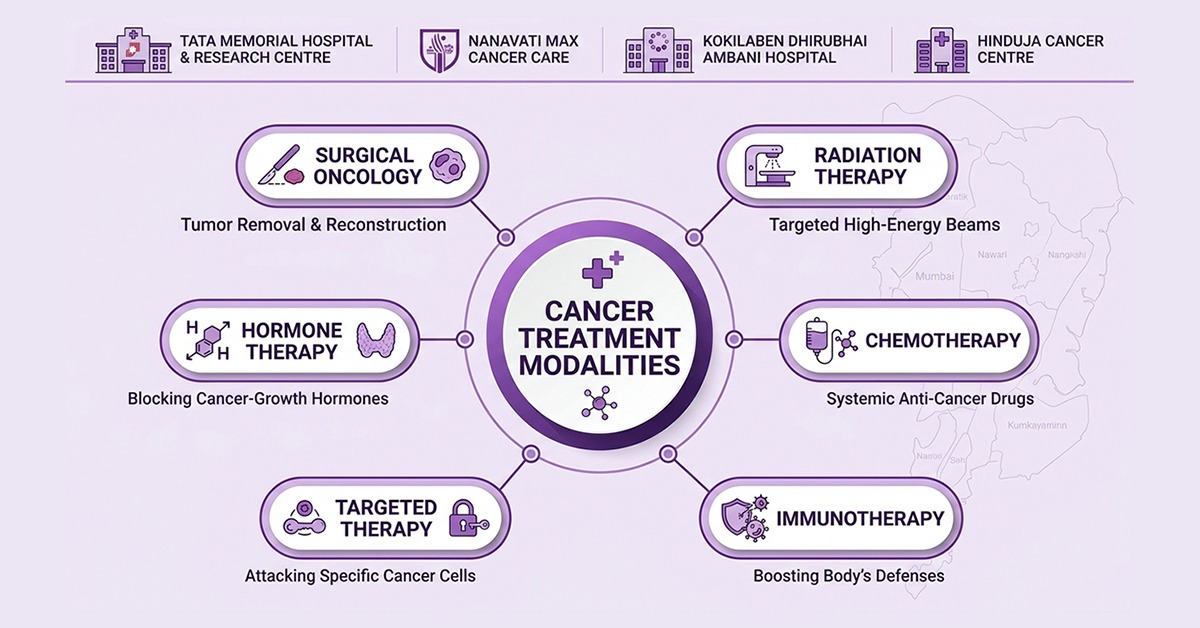
Oncology care is not a single pathway. Depending on cancer type, stage, and the patient's overall health, your treatment team may recommend one or a combination of the following modalities.
|
Cancer treatment modalities The main cancer treatment modalities are surgery, chemotherapy, radiation therapy, immunotherapy, targeted therapy, and hormone therapy. Most patients receive a combination — called multimodal therapy. Palliative care is also offered to manage symptoms and quality of life at every stage, not just at end of life. (Source: Indian Council of Medical Research Cancer Guidelines, 2023.) |
Surgery
Surgical oncology involves removing tumour tissue. Advances in laparoscopic and robotic surgery, available at hospitals like Kokilaben and Hinduja, have reduced recovery times significantly for cancers of the breast, colorectal system, and prostate.
Chemotherapy
Chemotherapy uses cytotoxic drugs to destroy rapidly dividing cancer cells. It is frequently administered in cycles to allow the body to recover. Common side effects include fatigue, nausea, hair loss, and suppressed immunity — which is where many patients seek additional supportive wellness care.
Radiation Therapy
Mumbai hospitals now offer Intensity-Modulated Radiation Therapy (IMRT) and Stereotactic Body Radiation Therapy (SBRT), which deliver precise doses to tumours while sparing surrounding tissue. Tata Memorial Hospital houses one of the largest radiation oncology departments in Asia.
Targeted Therapy & Immunotherapy
These newer modalities are personalised to the genetic profile of a patient's tumour. They are increasingly prescribed for breast, lung, and blood cancers. They are generally more expensive than conventional chemotherapy and not always covered under standard health insurance policies.
Cancer Treatment Costs in Mumbai: What to Budget and How to Plan
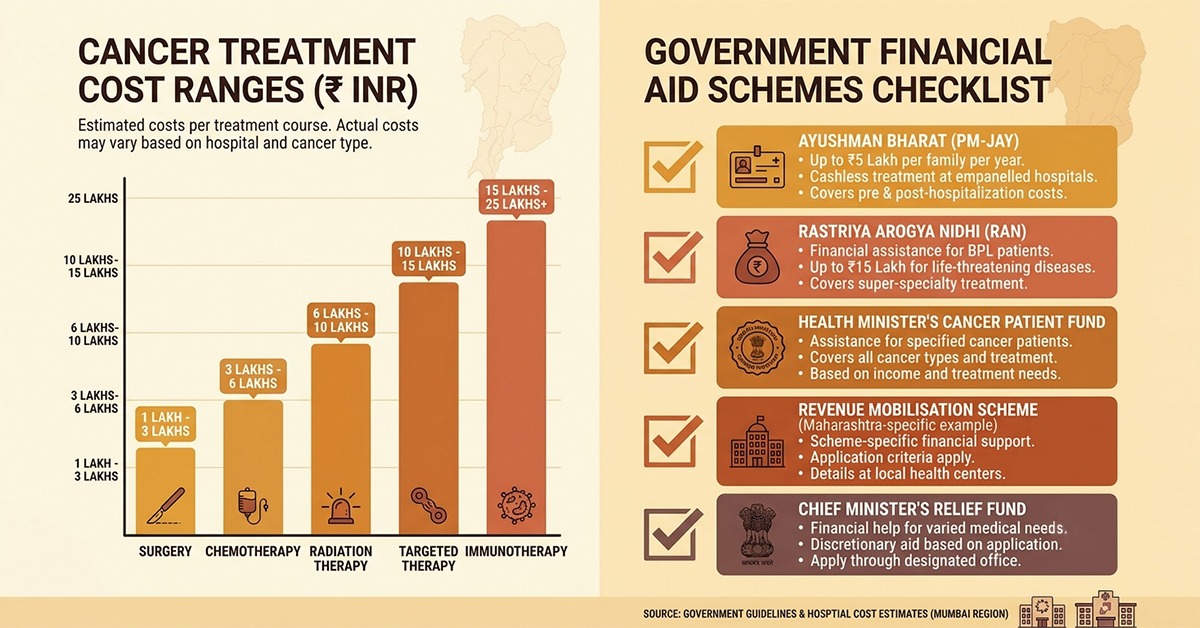
Cost is one of the most under-discussed aspects of a cancer diagnosis in India. Being financially prepared reduces anxiety and prevents treatment interruptions.
|
Cancer treatment cost in Mumbai Cancer treatment costs in Mumbai vary widely. Basic chemotherapy cycles at public hospitals can start from Rs. 5,000 per cycle; private hospital chemotherapy often ranges from Rs. 30,000 to Rs. 1,50,000 per cycle depending on the drug. Surgery costs range from Rs. 1.5 lakh to Rs. 15 lakh. Targeted therapy can exceed Rs. 2 lakh per month. Government schemes (Ayushman Bharat, MJPJAY) cover eligible patients at empanelled hospitals. (Indicative figures — confirm with your treating hospital.) |
Financial Support Options for Cancer Patients in Mumbai
- Ayushman Bharat – Pradhan Mantri Jan Arogya Yojana (PMJAY): covers up to Rs. 5 lakh per family per year at empanelled hospitals.
- Mahatma Jyotirao Phule Jan Arogya Yojana (MJPJAY): Maharashtra state scheme covering up to Rs. 2.5 lakh for specific oncology procedures.
- Tata Memorial Hospital's Patient Welfare Fund: assists BPL patients and those from rural Maharashtra.
- Non-profits: Indian Cancer Society (Mumbai chapter) offers navigation support, wigs, and prosthetics.
- Many pharmaceutical companies run patient assistance programmes for high-cost targeted therapies — ask your oncologist's office directly.
Managing Side Effects During Cancer Treatment: Practical Strategies That Work
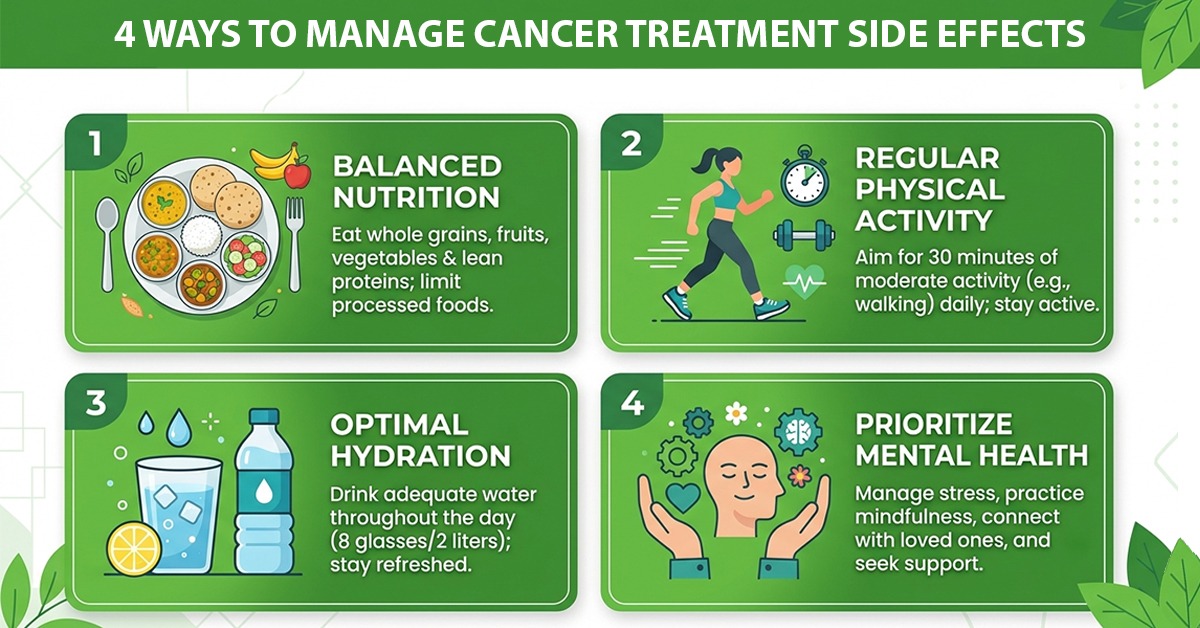
Side effect management is as important as the treatment itself. Patients who manage fatigue, nausea, and immune suppression effectively complete more treatment cycles and report better quality of life.
|
Managing chemotherapy side effects Common chemotherapy side effects include fatigue, nausea, mouth sores, hair loss, and reduced immunity. Evidence-based strategies include anti-nausea medications (prescribed), high-protein nutrition, gentle exercise such as walking, adequate hydration, and regular blood count monitoring. Some patients also explore AYUSH-registered complementary wellness supplements to support general immunity — always with their oncologist's knowledge. (Source: ASCO Patient Care Guidelines, 2024.) |
Nutrition During Cancer Treatment
Malnutrition is a significant risk during chemotherapy and radiation. Malnutrition is a well-documented risk during cancer treatment — international clinical guidelines report that 15–40% of cancer patients face nutritional decline at diagnosis, rising to as much as 80% during active treatment (SEOM Clinical Guidelines on Nutrition in Cancer Patients, 2018). Key dietary principles recommended by oncology dietitians include:
- Prioritise protein at every meal (dal, paneer, eggs, curd) to support tissue repair.
- Eat small, frequent meals to manage nausea — six smaller meals rather than three large ones.
- Avoid raw or unwashed produce during periods of low immunity (neutropenia).
- Stay hydrated: at least 2–3 litres of water daily unless your nephrologist advises otherwise.
Physical Activity
Contrary to a common misconception, light physical activity during chemotherapy improves outcomes. The 2024 ASCO–Society for Integrative Oncology fatigue management guideline, published in the Journal of Clinical Oncology, reviewed 17 randomized trials and confirmed that supervised exercise significantly reduces cancer-related fatigue during treatment.
Emotional and Psychological Support
Psychological wellbeing is an underserved aspect of cancer care in India. Mumbai-based resources include:
- Parivartan Cancer Support Group (Tata Memorial): free peer support for patients and caregivers.
- iCall (TISS Mumbai): low-cost counselling for cancer patients and families.
- Indian Cancer Society helpline: 1800-22-1951 (toll-free).
Complementary Cancer Care in Mumbai: What Ayurveda Can (and Cannot) Do
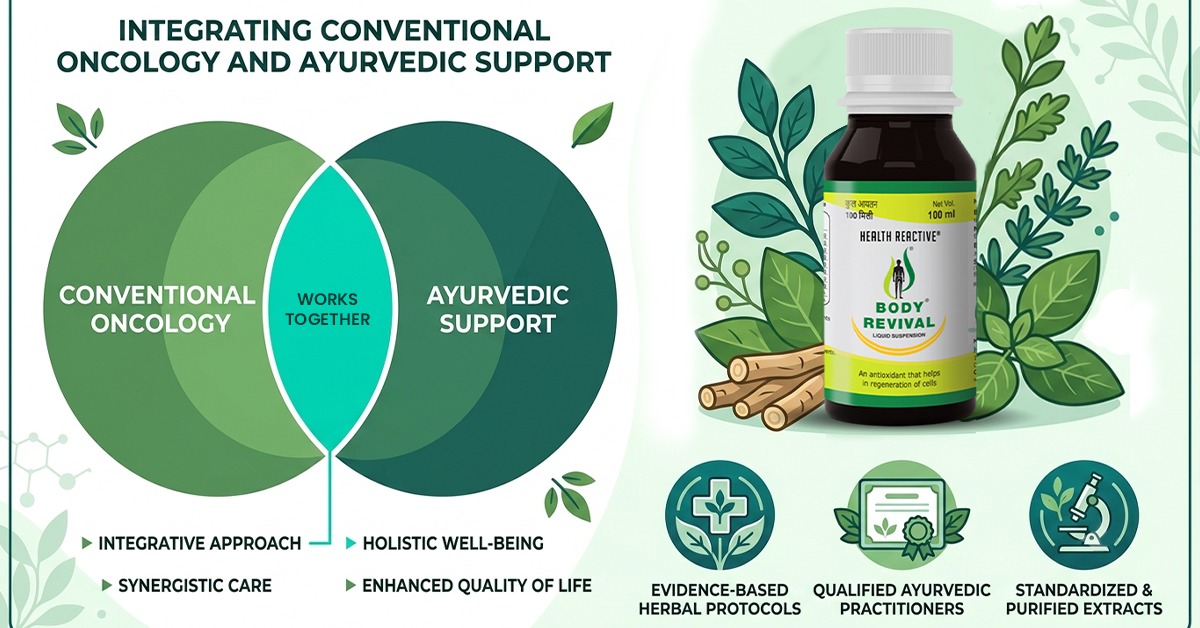
A growing number of oncologists in Mumbai now acknowledge that patients seek complementary wellness support alongside conventional care. Understanding what Ayurvedic products can legitimately offer — and where the limits lie — is essential for safe, informed decisions.
|
Ayurvedic complementary cancer care Ayurvedic complementary care for cancer patients refers to AYUSH-registered wellness formulations used alongside — not instead of — conventional oncology treatment. These products focus on supporting general immunity, managing fatigue, and promoting overall wellbeing during and after chemotherapy. They are not treatments or cures for cancer. Patients must disclose all supplements to their oncologist, as some herbs can interact with chemotherapy drugs. |
The Critical Distinction: Complementary vs. Alternative
|
Complementary Care |
Alternative Care |
|
Used alongside conventional oncology treatment |
Used instead of conventional treatment |
|
Supports immunity, general wellness, quality of life |
Claims to treat or cure cancer |
|
Disclosed to and approved by your oncologist |
Often withheld from medical team |
|
AYUSH-registered; follows DMRA compliance |
May lack regulatory approval |
|
Evidence base: supports wellbeing outcomes |
No clinical evidence for cancer cure |
Health Reactive India has spent nearly 30 years in this space. Our AYUSH-registered liquid formulation Body Revival was designed specifically to support general immunity and vitality in patients undergoing intensive medical treatment — not to compete with oncology. Our position has always been:
|
"Your oncologist is your primary care provider. We are a wellness support — nothing more." |
What Makes Body Revival Different from Other Ayurvedic Products?
- AYUSH-registered formulation manufactured at an ISO/GMP-certified facility in Andheri West, Mumbai.
- Liquid formulation designed for ease of ingestion — important for patients experiencing mouth sores or difficulty swallowing.
- CTRI-registered human clinical trial (CTRI/2023/11/059465) conducted at J.B. Roy State Ayurvedic Medical College & Hospital, Kolkata — making Body Revival one of very few Ayurvedic wellness products to have undergone a registered clinical research programme.
- No disease-treatment claims: all positioning is compliant with India's Drugs & Magic Remedies Act (DMRA).
We strongly encourage patients to share the product's constituent information with their oncologist before starting. A downloadable constituent information sheet is available on our website.
10 Questions Every Cancer Patient Should Ask Their Mumbai Oncologist

Being an informed patient improves outcomes. Research shows that patients who actively engage with their care team ask more questions and report higher satisfaction — and are less likely to experience preventable complications.
|
Questions to ask oncologist in Mumbai Key questions to ask your cancer specialist include: What is my cancer type and stage? What treatment do you recommend and why? What are the known side effects? What financial assistance is available? Can I use any complementary wellness products safely? How will we monitor treatment response? What is the expected timeline? Are there clinical trials I qualify for? What does supportive and palliative care involve? Who do I call in an emergency between appointments? |
- What is the exact type, stage, and grade of my cancer?
- Why are you recommending this specific treatment protocol over alternatives?
- What are the most common and most serious side effects I should expect?
- How will we know if the treatment is working, and how often will you assess response?
- Are there any clinical trials at this hospital I might be eligible for?
- What financial assistance programmes does this hospital offer?
- Are there any supplements, herbs, or Ayurvedic products I should avoid — or that are safe to continue?
- What does a typical week look like during treatment — how much can I work or exercise?
- What is the palliative care pathway at this hospital if needed?
- Who is my point of contact between appointments, and what is the emergency protocol?
Expert Perspective
|
<p>"The conversation between oncology and Ayurveda has matured considerably in the last decade. We no longer ask patients to choose. We ask them to be transparent. A patient who discloses that they are taking an AYUSH-registered wellness supplement allows us to make informed clinical decisions. A patient who hides it does not."</p> — Illustrative perspective representative of contemporary integrative oncology practice in Mumbai. Attributed not to a specific individual; patients should seek their own oncologist's guidance. |
Health Reactive India's own experience across 1 lakh+ patient interactions since 1996 consistently shows that patients who approach complementary care with transparency — discussing it openly with their oncology team — report better overall care coordination. This is our most important recommendation, independent of any product choice.
Navigating Cancer Treatment in Mumbai with Confidence
Mumbai offers genuinely world-class cancer treatment — from government institutions like Tata Memorial Hospital to private centres with robotic surgery and proton therapy. The right hospital, treatment modality, and financial pathway depend entirely on your individual diagnosis.
Three takeaways to carry forward: first, an informed patient with the right questions gets better care; second, side effect management is not optional — it directly affects your ability to complete treatment; and third, complementary wellness support used transparently alongside — never instead of — oncology care can form part of a holistic wellbeing strategy.
If you are exploring Ayurvedic complementary support, Body Revival by Health Reactive India has been supporting cancer patients' general immunity and vitality for nearly three decades from our Mumbai facility — with ISO/GMP certification, AYUSH registration, and a CTRI-registered clinical research programme that most Ayurvedic products cannot claim.
|
Ready to Learn More About Supportive Ayurvedic Care? Our wellness consultants are available to answer your questions—no commitment, no pressure. All advice is given alongside your existing oncology treatment. Book a Free Consultation → healthreactive.com | WhatsApp: +91 98192 37000 |
|
⚠ IMPORTANT MEDICAL DISCLAIMER DISCLAIMER: Body Revival is an Ayurvedic wellness supplement registered with AYUSH. It is not a cancer treatment or substitute for oncology care. Always consult your oncologist before beginning any supplement regimen. |
|
About the Digital Marketing Head Ajit Santosh Remje is the Digital Marketing Head of Health Reactive India, an ISO/GMP-certified Ayurvedic wellness manufacturer established in 1996 in Mumbai. With nearly three decades in Ayurvedic formulation and patient wellness. Body Revival By Health Reactive India has supported over 1 lakh cancer patients across India in managing wellness alongside conventional oncology care. |