7 Essential Facts About Cancer Treatment Vaccine Progress in India (2026 Guide)
Written by Dr. Hemant Kadam, BAMS | Medically reviewed by Dr. Farah Zariwala, BHMS
Published: 20 November 2026 | Last updated: 20 November 2026 | Reading time: about 22 minutes
|
Important information This article is for general education only. It is not medical advice, and it does not diagnose or treat any condition. Health Reactive does not offer, sell or administer cancer vaccines. Our Ayurvedic products are complementary supportive care. They are not a treatment or cure for cancer, and they never replace treatment advised by your oncologist. |
Is a Cancer Vaccine Really Here?
Every week, families ask the same hopeful question: has a cancer treatment vaccine finally arrived? The question is urgent. ICMR's National Cancer Registry Programme estimated about 15.7 lakh new cancer cases in India in 2025 (ThePrint, 2026).
The honest answer is mixed. In 2026, a personalised mRNA vaccine showed clear Phase 3 benefit in one cancer type. Yet no mRNA cancer vaccine is approved anywhere in the world. Headlines move fast, and some clinics and social posts promise far more than the science supports.
In this guide, you will discover how a cancer treatment vaccine works, which vaccines are approved today, and what is realistic for India — without hype or confusing jargon.
About this guide: It was written by Dr. Hemant Kadam, BAMS, and medically reviewed by Dr. Farah Zariwala, BHMS, who has more than 10 years of experience in Ayurveda and Homeopathy. Health Reactive is a 30-year-old company that has supported more than 1,00,000 cancer patients with complementary care.
|
Key takeaways • Cancer vaccines come in two groups: preventive (HPV, hepatitis B) and treatment vaccines. • Only a few treatment vaccines are approved. Most are still in clinical trials. • In 2026, a personalised mRNA vaccine cut melanoma recurrence risk by 42% in a Phase 3 trial. It is not yet approved. • India began free HPV vaccination for 14-year-old girls on 28 February 2026. • Always check approval status and trial registration before paying for any "cancer vaccine". |
What Is a Cancer Treatment Vaccine and How Does It Work?
Most people think of vaccines as shots that prevent infections like measles. A cancer treatment vaccine is different. It is given to someone who already has cancer, and its job is to train the immune system to recognise and attack tumour cells.
|
QUICK ANSWER A cancer treatment vaccine is an immunotherapy given to people who already have cancer. It works by showing the immune system specific tumour markers, called antigens, so T cells can find and attack cancer cells. Most are still tested in clinical trials, with only a few approved exceptions. |
The National Cancer Institute explains that treatment vaccines work against cancer cells themselves, not against a germ that causes cancer. They help the immune system learn to recognise antigens on those cells and destroy the cells that carry them.
Think of the immune system as a security team. Cancer cells often look like normal cells, so the team walks past them. A vaccine acts like a photograph of the intruder. It tells T cells exactly what to look for.
How is a treatment vaccine given?
The process depends on the vaccine type. Some are ready-made injections. Others are made for each patient. A personalised vaccine starts with a sample of the tumour, which is analysed to find its unique mutations. A custom vaccine is then manufactured, which takes time.
In the INTerpath-001 trial, patients received the personalised vaccine by intramuscular injection every three weeks for up to nine doses. They also received pembrolizumab every six weeks for up to nine cycles (Consultant360, 2026). Treatment schedules like this are set by trial protocols and by the treating oncologist, never by the patient.
Preventive vaccines versus treatment vaccines
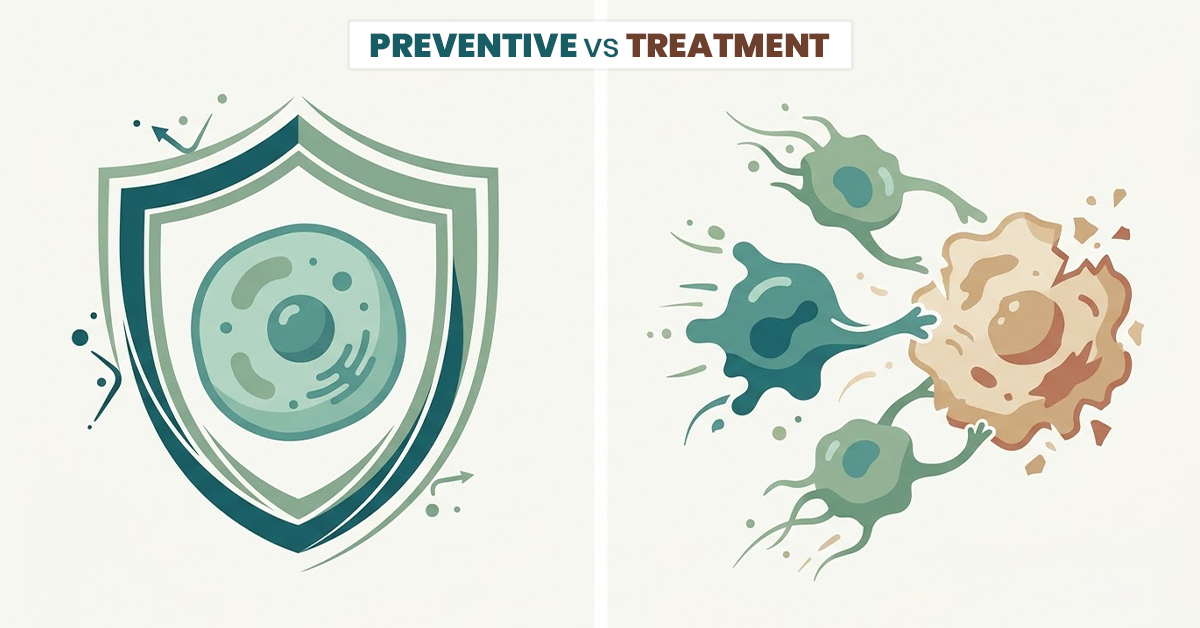
The term "cancer vaccine" covers two very different tools. Preventive vaccines protect healthy people from infections that can lead to cancer. Treatment vaccines are given after a cancer diagnosis.
|
Feature |
Preventive vaccines |
Treatment (therapeutic) vaccines |
|
Who receives it |
Healthy people, usually before exposure |
People who already have cancer |
|
What it targets |
Cancer-causing infections such as HPV and hepatitis B |
Antigens on the person's own tumour cells |
|
Main goal |
Prevent infection and later cancer |
Help the immune system attack existing cancer |
|
Availability |
Widely available and well proven |
A few approved; many in clinical trials |
According to UMM Health, the HPV vaccine protects against a virus linked to cervical, vulvar, vaginal, anal, penile and throat cancers. The hepatitis B vaccine prevents an infection that can lead to liver cancer.
Why treatment vaccines are hard to build
Cancer cells are clever. They suppress the immune system, which is partly how a tumour grows in the first place. The American Cancer Society notes that this limits how well the body responds to a vaccine.
A treatment vaccine must do two things. It must trigger an immune response. It must also be strong enough to overcome the immune system's usual tolerance of cancer cells. Researchers therefore often combine vaccines with other immunotherapy drugs, such as checkpoint inhibitors.
The ACS also notes that vaccines may work better against smaller tumours or earlier-stage disease. That is one reason many current trials test vaccines after surgery, when little cancer remains.
What Are the 4 Types of Cancer Vaccines?
Doctors first divide cancer vaccines into two groups: preventive and treatment. Researchers then group treatment vaccines by the platform used to deliver tumour antigens. Sources describe these groupings slightly differently, so you may see other lists.
|
QUICK ANSWER Cancer vaccines are commonly grouped into four types by how they are made: cell-based, protein or peptide-based, nucleic-acid-based (DNA or mRNA), and vector-based using viruses or bacteria. Each type delivers tumour antigens to the immune system differently. Classifications vary between sources. |
1. Cell-based vaccines
These use the patient's own immune cells. Doctors collect cells from the blood, expose them to a tumour antigen in a laboratory, and return them to the body. Sipuleucel-T, used for advanced prostate cancer, is the best-known example. It is a dendritic cell vaccine.
2. Protein and peptide-based vaccines
These use pure antigens, which are proteins or small pieces of proteins found on cancer cells. The American Cancer Society lists cancer cells, parts of cells and pure antigens among the raw materials for cancer vaccines. Several peptide vaccines are in trials, but none has become standard care.
3. Nucleic-acid-based vaccines (DNA and mRNA)
These deliver genetic instructions that tell the body's own cells to make a tumour antigen. The immune system then learns to target that antigen. The mRNA vaccine intismeran autogene is the most advanced example. It is built from up to 34 neoantigens found in an individual patient's tumour (Nordic Life Science, 2026).
4. Vector-based vaccines
These use a weakened virus or bacterium as a delivery vehicle. Talimogene laherparepvec (T-VEC) is a modified herpes simplex virus used for some melanomas. BCG is a weakened bacterium placed into the bladder for early-stage bladder cancer. BCG acts as a local immune stimulant rather than a tumour-specific vaccine, so some experts classify it separately.
Off-the-shelf versus personalised vaccines
Another useful split is whether the vaccine is the same for everyone. Off-the-shelf vaccines target antigens shared by many patients. Personalised vaccines are made from each person's own tumour mutations, called neoantigens.
Personalised vaccines may hold greater promise because cancer cells mutate rapidly. They are also costlier, because the tumour must be sequenced and a custom vaccine manufactured for each patient.
Which Cancer Treatment Vaccine Options Are Approved Today?
Despite decades of research, very few cancer vaccines have reached approval. Knowing the short list protects you from offers that claim more than the evidence shows.

|
QUICK ANSWER Five cancer vaccines are approved by the US FDA: HPV and hepatitis B vaccines for prevention, and BCG, sipuleucel-T and T-VEC for treatment. Each treatment vaccine serves a narrow patient group. As of November 2026, no personalised mRNA cancer vaccine is approved anywhere in the world. |
The Cancer Research Institute summarises the FDA-approved list below. Approval status in India can differ, which we cover in a later section.
|
Vaccine |
Type |
Cancer addressed |
FDA approval |
|
HPV vaccines (e.g., Gardasil) |
Preventive |
HPV-related cancers, including cervical cancer |
2006 |
|
Hepatitis B vaccines |
Preventive |
Liver cancer (by preventing hepatitis B infection) |
1981 |
|
BCG (Bacillus Calmette-Guérin) |
Treatment |
Early-stage bladder cancer |
1990 |
|
Sipuleucel-T (Provenge) |
Treatment |
Metastatic castration-resistant prostate cancer |
2010 |
|
T-VEC (Imlygic) |
Treatment |
Unresectable melanoma |
2015 |
What the approved treatment vaccines actually do
BCG became the first FDA-approved immunotherapy in 1990. It remains a standard treatment for early-stage bladder cancer. Sipuleucel-T was approved in 2010 for men with advanced prostate cancer whose symptoms are few or absent and whose cancer no longer responds to hormone treatment (National Cancer Institute).
T-VEC treats some people with melanoma that has returned after surgery and cannot be removed by further surgery. Notice how narrow each approval is. Each vaccine serves one specific patient group, not "cancer" in general.
An important caution about the word "vaccine"
Treatment vaccines are not a cure. UMM Health states that treatment vaccines do not prevent or cure cancer, but they can help keep it under control in some settings. Be wary of any product marketed as a "cancer cure vaccine" outside a registered clinical trial.
Has a Cancer Vaccine Been Successful? What the Evidence Shows
This is the question behind most searches for "cancer vaccine successful." The evidence in 2026 is encouraging but specific. It supports hope in certain settings, not a universal breakthrough.
|
QUICK ANSWER Yes, in specific settings. The Phase 3 INTerpath-001 trial found that a personalised mRNA vaccine plus pembrolizumab cut the risk of recurrence or death by 42% in resected high-risk melanoma. It remains investigational and does not prove success across all cancers. |
The 2026 melanoma result
In August 2026, Merck and Moderna announced that the Phase 3 INTerpath-001 trial met its main goal. The trial enrolled 1,137 patients with completely resected stage IIB to IV melanoma (Indian Pharma Post, 2026). Patients received either the vaccine plus pembrolizumab (Keytruda) or pembrolizumab alone.
Full results were later presented at the ESMO Congress 2026. Healio reported a 42% reduction in the risk of recurrence or death. It also noted that overall survival data are still immature. The safety profile matched earlier studies, with no new safety signals identified.
Earlier Phase 2b data pointed the same way. Five-year follow-up from the KEYNOTE-942 trial showed a 49% lower risk of recurrence or death compared with Keytruda alone (Indian Pharma Post, 2026).
What this result does and does not mean
- It does mean: a personalised mRNA vaccine can add benefit on top of standard immunotherapy in one high-risk melanoma setting.
- It does not mean: the vaccine is approved. It remains investigational and is not yet available for routine use.
- It does not mean: the same result applies to breast, lung, oral or other cancers. Each cancer needs its own trials.
- For India: melanoma is comparatively uncommon here, so the result is a proof of concept more than an immediate treatment option.
Dr. Vanita Noronha, a medical oncologist at Tata Memorial Hospital, Mumbai, told The Indian Express that the result gives Phase 3 proof that personalised vaccines can improve on an established treatment. She also pointed to affordability, tumour sequencing and specialised manufacturing as hurdles for India (Madhyamam, 2026).
How to read a cancer vaccine headline
News reports on cancer vaccines can sound dramatic. A few simple questions help you judge them.
- Which cancer, and which stage? A result in resected melanoma says little about lung or oral cancer.
- Compared with what? The 42% figure compares the vaccine plus Keytruda with Keytruda alone, not with no treatment.
- What was measured? Recurrence-free survival measures time without the cancer returning. It is not the same as overall survival, which is still maturing.
- Is it relative or absolute? A 42% relative reduction in risk is not the same as 42 in 100 people being protected.
- Is it approved? Investigational means not yet cleared for routine use.
Earlier successes were modest, and setbacks are common
Sipuleucel-T proved that vaccination can work. In an integrated analysis of trials, patients lived a median 23.2 months with the vaccine versus 18.9 months in the control group (Journal for ImmunoTherapy of Cancer, 2023). That is a real gain, but a gain of months, not a cure.
Failures are also part of the story. Several vaccines have failed in large Phase 3 trials, often because they were tested alone in "cold" tumours that the immune system barely notices (Cancer Health). More recently, BioNTech ended a Phase 2 trial of its personalised vaccine BNT122 in colorectal cancer on 28 August 2026, according to ThePrint.
Early signals in harder cancers
A Phase 1 trial at Memorial Sloan Kettering tested a personalised mRNA vaccine in 16 people with early-stage pancreatic cancer. Immune cells activated by the vaccine persisted for nearly four years in some patients. Researchers do not yet know whether the vaccine delayed recurrence, and a randomised Phase 2 trial is examining that question.
What Are the Side Effects of Cancer Vaccines?
Side effects depend on the type of vaccine, the cancer being treated and the person receiving it. Preventive vaccines such as the HPV vaccine have well-established safety records. Treatment vaccines are newer, and their side effects are still being documented.
|
QUICK ANSWER Side effects of cancer vaccines vary by vaccine type. Common effects include injection-site reactions and flu-like symptoms such as fever, chills and tiredness. Rare serious reactions include severe allergy, and sipuleucel-T carries a stroke warning. Your oncologist should explain the risks before any vaccine or trial. |
Common side effects
The National Cancer Institute says treatment vaccines can cause flu-like symptoms. These usually resemble a mild illness and often settle within days. The American Cancer Society adds that side effects differ from person to person.
- Soreness, redness or swelling where the vaccine was given
- Fever, chills, body aches and tiredness
- Headache or nausea in some people
Rare but serious side effects
The NCI notes that a severe allergic reaction is possible, and that sipuleucel-T can cause stroke. These risks are why treatment vaccines should be given only under specialist supervision, at an approved centre or inside a registered trial.
Side effects when a vaccine is combined with other drugs
Many modern vaccines are combined with checkpoint inhibitors like pembrolizumab. The combination can cause side effects from both drugs. In INTerpath-001, the companies reported that the safety profile matched earlier studies of the combination and found no new safety signals.
When to call your doctor
- Fever that is high or lasts more than a couple of days
- Swelling of the face or lips, breathing difficulty or a widespread rash
- Sudden weakness, trouble speaking or severe headache
- Any symptom that worries you or your caregiver
Seek emergency care immediately for the second and third points. Always tell your oncologist about every medicine, supplement or herbal product you take. Some products can interact with cancer treatment.
When Will a Cancer Vaccine Be Available?
Patients rightly want a date. No honest source can give one for "the" cancer vaccine, because each vaccine and each cancer follows its own path. What we can describe is the process and where the leading candidate stands.
|
QUICK ANSWER No one can give an exact date. Merck and Moderna plan to engage regulators about filing intismeran for melanoma after the Phase 3 result. Approval still requires regulatory review, so use in other cancers will take longer. As of November 2026, no mRNA cancer vaccine is approved. |
What must happen before approval
- Full data review. Trial results are published in a peer-reviewed journal. The INTerpath-001 findings have been accepted for publication in The New England Journal of Medicine.
- Regulatory filing. The companies must submit data to regulators such as the US FDA or India's CDSCO.
- Regulatory review. Authorities check safety, benefit and manufacturing quality, which can take many months.
- Manufacturing and pricing. Personalised vaccines require tumour sequencing and custom production for each patient.
- Local approval and access. Each country approves independently. India has its own approval and access steps.
What is in the pipeline
Merck and Moderna's INTerpath programme now includes nine Phase 2 and Phase 3 trials. These cover melanoma, non-small cell lung cancer, bladder cancer and renal cell carcinoma. Phase 1 studies are exploring pancreatic, gastric and perioperative lung cancers (AIM at Melanoma, 2026).
Other companies, including BioNTech, are testing personalised vaccines with mixed results. Dr. Shailesh Shrikhande of Tata Cancer Care Foundation has noted that pancreatic cancer incidence in India has risen over two decades (Tata Trusts, 2026). That makes research in this area especially relevant for Indian patients.
A realistic expectation
Promising Phase 3 results in melanoma are a milestone. They are not a signal that vaccines for every cancer are around the corner. For most cancers, wider availability will depend on years of further trials. If a clinic gives you a firm date, ask for the evidence in writing.
Cancer Vaccine in India: What Is Available Today?
India's cancer vaccine story is clearest on prevention. The country now offers free HPV vaccination at national scale. For treatment vaccines, access remains limited to a few established products and registered clinical trials.
|
QUICK ANSWER In India, the HPV vaccine is the main cancer-preventive vaccine available, and it entered the national programme on 28 February 2026 for 14-year-old girls. As of November 2026, no mRNA cancer treatment vaccine is approved in India. Access to others is through registered clinical trials. |
The national HPV vaccination programme
India launched its nationwide HPV vaccination programme on 28 February 2026 from Ajmer, Rajasthan. It offers free single-dose Gardasil-4 to about 1.15 crore girls aged 14 across all states (IndiaMedToday, 2026).
The Union Health Ministry chose Gardasil, which protects against HPV types 16 and 18 (the main cervical cancer types) and types 6 and 11. Supplies were secured through a procurement mechanism supported by Gavi (Business Today, 2026).
The burden is large. An *International Journal of Women's Health* review cites National Cancer Registry estimates of about 79,000 new cervical cancer cases and 43,000 deaths in India in 2024 (Lakshmanasamy et al., IJWH, 2026). GLOBOCAN 2022 estimates are higher, at over 1.2 lakh cases. The figures differ because the sources use different methods.
Cervavac and other HPV options
Serum Institute of India markets Cervavac, a made-in-India quadrivalent HPV vaccine. It is available in the private market, with an MRP of ₹2,000 per unit and effective retail prices of ₹1,200 to ₹1,700 per dose, according to Business Today. ThePrint reports that studies of Cervavac's efficacy as a single-dose vaccine are still under way (ThePrint, 2026).
Prices and schedules change, so confirm current details with your doctor or the nearest government immunisation centre.
Vaccination works best alongside screening
The same IJWH review assesses India's progress toward the WHO 90-70-90 elimination targets, which combine vaccination, screening and treatment. It notes that indigenously produced HPV testing kits were validated for cervical screening in 2025. Vaccination protects future generations, but women who are already adults still benefit from regular screening, so ask your doctor about HPV testing or other screening options.
Treatment vaccines in India
As of November 2026, no mRNA cancer vaccine is approved anywhere in the world, and no Indian-developed mRNA cancer vaccine has been identified as entering human trials (ThePrint, 2026). ThePrint's reporting also describes PopVax, a Hyderabad start-up, offering an experimental design and manufacturing service for personalised vaccines at a reported cost of about ₹2.7 crore per patient. That announcement is not an approved treatment or an ongoing clinical trial.
How to protect yourself from unverified offers
Because hope is powerful, some providers market "immune vaccines" or "cancer vaccine injections" privately. Before paying anything, ask these questions.
- Is this product approved by India's regulator (CDSCO) for cancer? Ask for the approval in writing.
- If it is a trial, is it registered on the Clinical Trials Registry of India (ctri.nic.in)? Ask for the registration number.
- Has an ethics committee approved the study, and is the trial free of participant charges?
- Does my own oncologist know about this, and do they support it?
If you want to explore research, ask your treating oncologist to look for a registered trial that matches your cancer type and stage. Entry is decided by defined eligibility criteria, not by payment.
Where Does Complementary Supportive Care Fit Alongside Cancer Treatment?
Vaccines, surgery, chemotherapy, radiation and immunotherapy are decisions for you and your oncology team. Many families also look for ways to support everyday wellbeing during treatment. This is where complementary supportive care may play a role.
|
QUICK ANSWER Complementary supportive care is used alongside, never instead of, conventional cancer treatment. It focuses on comfort, wellbeing and daily resilience during therapy. It does not treat or cure cancer and does not replace vaccines, surgery, chemotherapy or immunotherapy. Always tell your oncologist about any supplement you use. |
Health Reactive has worked in Ayurvedic manufacturing for 30 years, and has supported more than 1,00,000 patients with complementary care. Our flagship product, Body Revival, is an Ayurvedic liquid formulation positioned strictly as supportive care alongside conventional treatment. It is not a vaccine, and it is not a treatment or cure for cancer.
What supportive care can look like day to day
Supportive care is broader than any single product. Families often combine several simple habits, guided by the oncology team.
- Meeting an oncology dietitian for food guidance that fits your treatment phase
- Keeping gentle movement and rest routines that your doctor approves
- Seeking emotional support through counselling, support groups or trusted family
- Keeping a simple diary of symptoms and questions for each hospital visit
Caregivers matter too. Looking after the person who looks after the patient helps the whole family cope.
Good questions to ask before adding any supportive product
- Will this interact with my current treatment, including immunotherapy or a trial drug?
- Should I pause it before surgery, a vaccine dose or a scan?
- What should I watch for, and when should I call the oncology team?
If you are participating in a clinical trial, ask the trial team before using any herbal or Ayurvedic product. Some trials restrict additional products to protect the quality of their results.
Expert Insight and Our Perspective
James Gulley, MD, PhD, head of the immunotherapy section at the National Cancer Institute's Center for Cancer Research, describes the aim of vaccines in tumours that hide from the immune system. His goal is to "turn a cold tumor hot" — James Gulley, MD, PhD, NCI Center for Cancer Research (Cancer Health).
Our perspective: [ORIGINAL INSIGHT — to be supplied by the Health Reactive patient-support team: 2–3 sentences, in company voice, on what families most often ask about cancer vaccines and how your team responds. This section is your strongest first-hand E-E-A-T signal and cannot be written without real team input.]
Cancer Vaccine Myths and Facts
|
Myth |
Fact |
|
A cancer vaccine can cure any cancer. |
No cancer vaccine is a proven cure. Approved treatment vaccines help in specific patient groups. |
|
News of a successful trial means the vaccine is available in India. |
The melanoma vaccine is investigational. No mRNA cancer vaccine is approved anywhere as of November 2026. |
|
Paying more gets access to an approved cancer vaccine. |
Entry to a registered trial depends on eligibility criteria set by the study, not on payment. |
|
Cancer vaccines only prevent cancer. |
Two groups exist: preventive vaccines for healthy people and treatment vaccines for people with cancer. |
|
Ayurvedic support can replace vaccines or treatment. |
Complementary care supports wellbeing only. It never replaces treatment advised by your oncologist. |
A cancer treatment vaccine is no longer only an idea. A 2026 Phase 3 trial showed real benefit in high-risk melanoma, and India now vaccinates girls against HPV at national scale. Still, only a few treatment vaccines are approved, none of the personalised mRNA versions is available outside trials, and success in one cancer does not carry over to others.
Three points are worth remembering. Prevention through HPV and hepatitis B vaccination works today. Treatment vaccines should be accessed only through approved products or registered trials. And supportive care belongs alongside, never in place of, your oncologist's plan.
Talk to Us About Supportive Care
If you or a family member is going through cancer treatment and want to understand complementary supportive care options, our team is here to listen and guide you. This consultation does not replace your oncologist's advice.
Book a Free Consultation → healthreactive.co/bodyrevival
Frequently Asked Questions About Cancer Vaccines
Cancer vaccines are commonly grouped by platform: cell-based, protein or peptide-based, nucleic-acid-based (DNA or mRNA), and vector-based using viruses or bacteria. They are also divided into preventive and treatment vaccines. Sources vary slightly in how they classify them.
In specific settings, yes. HPV and hepatitis B vaccines prevent infections that cause cancer. For treatment, a 2026 Phase 3 trial showed a 42% lower risk of recurrence or death in high-risk melanoma. It is still investigational, and results do not apply to every cancer.
Common effects include injection-site soreness and flu-like symptoms. Rare effects include severe allergic reactions, and sipuleucel-T carries a stroke warning. Your oncologist should review the risks of any vaccine or trial with you.
No exact date exists. Merck and Moderna plan to engage regulators for their melanoma vaccine after the Phase 3 result, but it is not yet approved. For other cancers, availability depends on the results of ongoing trials.
India offers the preventive HPV vaccine free to 14-year-old girls under the national programme launched on 28 February 2026. No mRNA cancer treatment vaccine is approved in India as of November 2026. Treatment vaccines are accessible mainly through registered trials.
No cancer vaccine is currently considered a cure. Approved treatment vaccines help control disease in specific patient groups. Be cautious of any provider claiming a vaccine can cure cancer.
Many people do, but you should always tell your oncologist first. Complementary care supports wellbeing and does not treat cancer. Some herbal products can interact with medicines or affect trial participation.
|
About the Author and Reviewer Dr. Hemant Kadam, BAMS — Author. has more than 10 years of experience in Ayurveda and Homeopathy. Dr. Farah Zariwala, BHMS — Medical Reviewer. Dr. Zariwala has more than 10 years of experience in Ayurveda and Homeopathy. Health Reactive is an AYUSH-registered, ISO/GMP-certified Ayurvedic wellness company with 30 years of experience, supporting more than 1,00,000 patients with complementary care. |