Immunity and Nutrition Support During Cancer Treatment: An Ayurvedic Perspective
Medically reviewed by: Dr. Farah Zariwala (BHMS)
Last updated: 31/08/2026
"Boost your immunity" is one of the most common pieces of advice given to cancer patients — and one of the most misunderstood. During active cancer treatment, immunity isn't something to simply push higher; it's something that needs to be supported carefully, in coordination with your treatment plan. This page explains what that distinction actually means, and where Ayurvedic nutrition principles fit in.
Why "Boosting Immunity" Is the Wrong Frame During Treatment
Outside of cancer treatment, "immune boosting" is a reasonably harmless idea. During treatment, it needs more nuance:
- Chemotherapy often lowers white blood cell counts on purpose or as a side effect — the goal during this window is usually to protect and support the immune system from further strain, not artificially stimulate it.
- If you're on immunotherapy (checkpoint inhibitors and similar treatments), immune-stimulating supplements are a genuine caution point — some substances that "boost" immune activity could theoretically interact with how these drugs work. This is a conversation for your oncologist, not a decision to make from a wellness article.
- "Immunity" isn't one thing — it's a complex system, and no food, herb, or supplement measurably "raises" it in a way you can feel or verify without lab testing.
The more useful goal during treatment is nutritional adequacy and resilience — giving your body what it needs to tolerate treatment and recover between cycles — rather than chasing an "immune boost."
What Ayurvedic Nutrition Principles Actually Offer Here
Ayurveda's traditional approach to supporting a person through illness leans heavily on digestibility and consistency — ideas that map reasonably well onto what oncology nutrition also recommends, even without the same vocabulary:
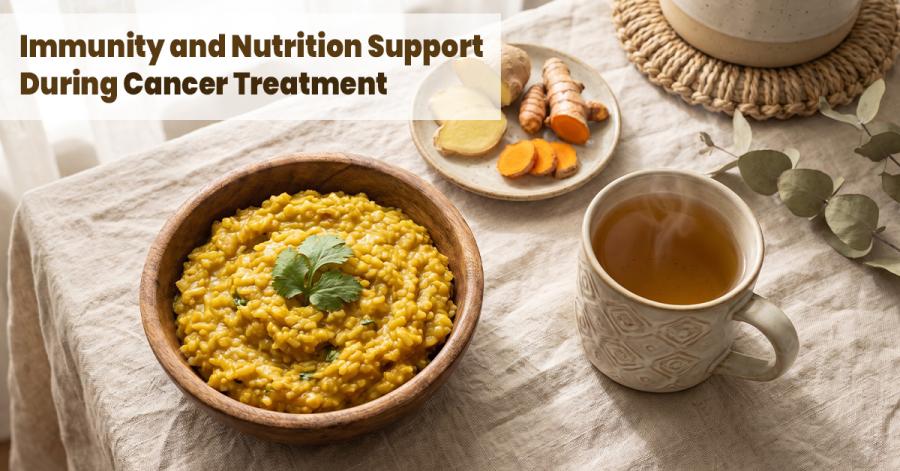
- Easily digestible, warm, freshly prepared food over heavy, cold, or highly processed meals — useful when appetite and digestion are already strained by treatment
- Regular meal timing to support energy levels and reduce the peaks and crashes that make fatigue worse
- Hydration with warmth (herbal infusions, warm water) rather than relying solely on cold beverages, which traditional Ayurvedic practice associates with sluggish digestion
- Attention to appetite as a signal, not something to override — small, frequent meals rather than forcing large ones
None of this replaces oncology dietitian guidance where it's available — it's a complementary lens, not a competing one.
Foods and Habits Worth Discussing With Your Care Team
Rather than a list of "superfoods" (a marketing term, not a clinical one), it's more useful to bring specific questions to your oncologist or an oncology dietitian:
- Are there protein targets I should be hitting to support recovery between cycles?
- Given my specific blood counts, are there any foods I should avoid right now (e.g., certain raw foods during neutropenia)?
- Is turmeric, ginger, or other common Ayurvedic kitchen ingredients fine at culinary doses, or should I be cautious even there given my specific drugs?
- Would a formal nutrition consult make sense at this stage of my treatment?
Where Supportive Products Fit — and Where They Don't
A supportive-care product's realistic job during this period is to help with the practical burden — appetite, digestion, general vitality — not to "boost immunity" in a way that promises disease-level outcomes. This is consistent with how Body Revival's own registered trial was scoped: quality of life and treatment-related symptom burden in breast cancer patients on chemotherapy or radiotherapy, not immune metrics or disease outcomes. See the trial breakdown →
As with any supplement during treatment, disclose it to your oncologist first — see our full safety guide on Ayurveda and chemotherapy →
This page is general information, not medical or nutritional advice. Immune status, blood counts, and dietary needs vary significantly by treatment type and individual — always follow your oncology team's specific guidance, and ask for a formal dietitian referral if one hasn't been offered.
Frequently Asked Questions
Not without checking first — this is one of the more important disclosure conversations to have with your oncologist, especially if you're on immunotherapy, where immune-stimulating substances need particular caution.
There's no single diet that fits everyone — it depends on your specific side effects, blood counts, and treatment stage. An oncology dietitian consult is generally more useful than general "cancer diet" advice found online.
Traditional Ayurvedic dietary principles emphasize digestibility, warmth, and consistency rather than a fixed "cancer diet" — these principles can complement, but shouldn't replace, guidance from your oncology nutrition team.